One inspector can check 150 units in an eight-hour day if each unit takes two minutes and the remaining three hours cover sampling, separate tests, reporting, and other tasks. Under the same time budget, one-minute checks allow 300 units; five-minute checks allow 60.
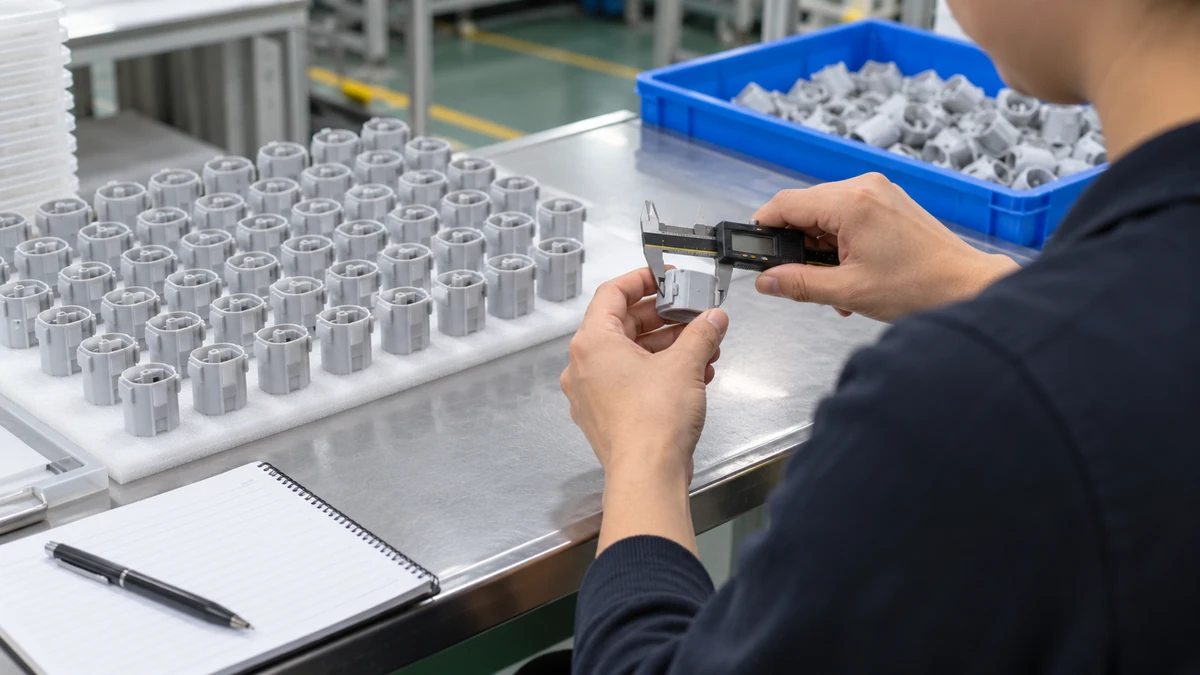
AI-generated illustration of an inspection scenario.
There is no fixed daily quantity across all products. Before booking, ask for the number of units the inspector can complete against your checklist—not just the number they can look at.
The figures below are planning examples, not measured industry averages. A man-day means one inspector working one day; the hours and activities included depend on the service agreement.
Daily Inspection Capacity
This example reserves 180 of 480 working minutes for tasks outside individual product checks, leaving 300 minutes for checking units. Travel and breaks are excluded from that working-time budget.
| Average Time per Unit | Units Checked in 300 Minutes |
|---|---|
| 1 minute | 300 units |
| 1.5 minutes | 200 units |
| 2 minutes | 150 units |
| 3 minutes | 100 units |
| 5 minutes | 60 units |
| 10 minutes | 30 units |
To estimate the time per unit, run a trial using the agreed checklist. Include handling, visual checks, measurements, function checks, and routine notes. If 10 representative units take 20 minutes, two minutes per unit is a starting estimate—not yet a guaranteed daily rate. Record the SKU and checklist version, and allow separately for defects or retests that did not occur during the trial.
Can 200 Units Be Checked in One Day?
For a final random inspection taking two minutes per sampled unit, the following workload exceeds an eight-hour booking:
| Task | Estimated Time |
|---|---|
| Individual checks on 200 units | 400 minutes |
| Document review, quantity checks, and sampling | 60 minutes |
| Separate product or packaging tests | 30 minutes |
| Results review and reporting | 60 minutes |
| Allowance for unexpected issues | 30 minutes |
| Total | 580 minutes |
The shortfall is 100 minutes. The provider should confirm extra time or staffing before the visit. If it counts travel or breaks within the quoted eight hours, the available working time will be lower.
Estimated workload = sample quantity × average checking time per unit + other tasks + allowance for unexpected issues.
Count each task once. If unpacking is already included in the per-unit estimate, do not add it again. For automated tests, separate the inspector’s operating time from the machine’s running time; a test may run alongside other checks but still delay completion.
What Adds Time?
- Measurements: One additional minute per unit adds 200 minutes to a 200-unit inspection.
- SKU changes: Twenty SKUs require 19 more changeovers than one SKU. At three minutes to review each new specification and adjust the setup, those changes add 57 minutes.
- Packaging: An extra 30 seconds to unpack and repack each unit adds 100 minutes across 200 units.
- Defect records: Photographing and recording 15 findings at two minutes each adds 30 minutes.
- Equipment: A machine processing 10 units per hour can test only 60 units in six hours. Adding another inspector does not remove that limit.
For multi-SKU orders, provide quantities and checklists by SKU. An order containing 20 models may need different measurements, accessories, labels, or test settings even when the total sample is only 200 units.
AQL Sample Size Is Not a Daily Quota
ANSI/ASQ Z1.4-2003 (R2018) provides acceptance sampling plans for inspection by attributes; it does not set an inspector’s daily output.[1] The example below uses normal inspection, single sampling, General Inspection Level II, and AQL 2.5.
| Lot Size | Sample Size |
|---|---|
| 281–500 units | 50 units |
| 501–1,200 units | 80 units |
| 1,201–3,200 units | 125 units |
| 3,201–10,000 units | 200 units |
| 10,001–35,000 units | 315 units |
Lot size and inspection level determine a sample-size code letter. Read that code with the chosen sampling plan, inspection severity and AQL to obtain the sample size and acceptance/rejection numbers, following any arrows or other table instructions. Apply the agreed switching rules for a continuing series of lots.
Confirm the applicable standard edition, acceptance and rejection numbers, and any table instructions before using these quantities. General Inspection Level II and normal inspection are separate settings; specifying only “AQL 2.5” does not define the complete plan.
A 5,000-unit lot and a 10,000-unit lot both require 200 samples under this example. Their individual sample-checking time can be the same, although quantity verification and carton access may take longer. Multiple SKUs should not automatically be combined into one lot simply because they share a purchase order.
The plan must also state which checks cover the main sample and which use separately agreed quantities. A main sample of 200 units does not automatically mean 200 runs of every measurement or special test.
AQL 2.5 does not establish that a shipment contains 2.5% defective goods. Acceptance sampling supports a lot acceptance decision rather than an exact estimate of lot quality.[2] A passing result still carries a risk of accepting an unacceptable lot.[3]
How Long Does 100% Inspection Take?
A 100% inspection of 5,000 units at 1.5 minutes each requires 125 hours of individual checks. If each inspector provides five checking hours per day, that equals 25 man-days of checking capacity.
The provider must confirm that daily allowance for the actual setup and account for preparation, coordination, and reporting in the quote. “100% inspection” should identify the features checked on every unit; it does not mean every possible test is performed or that no defects can be missed.
Required laboratory tests need a separate schedule. For example, nearly all children’s products sold in the United States require testing by a CPSC-accepted third-party laboratory against applicable children’s product safety rules. Routine shipment checks do not replace that testing. The responsible firm issues the Children’s Product Certificate based on passing test results; an inspection report is not that certificate.[4]
What to Confirm Before Booking
- Scope: List each SKU, order quantity, proposed sample quantity, and test quantity.
- Requirements: Supply the approved specification and checklist versions. Use measurable limits such as “length: 100 ± 2 mm.”
- Factory readiness: Confirm that the selected cartons can be accessed and that the required products, documents, and test equipment will be available.
- Support: Name who will move cartons, unpack products, and repack checked goods. The inspector should control sample selection.
- Charges: Confirm the working hours included and whether travel, reporting, or extra time costs more.
Our order contains ___ units across ___ SKUs, with a proposed sample of ___ units. Please estimate the time against the attached checklist, including separate tests and reporting. If one man-day is insufficient, please specify the extra time, staffing, and cost.
If only 150 of the planned 200 units are checked, the report must record the 50-unit shortfall and any unfinished tests. Any change to the sample or scope needs approval; the report must not present the original plan as completed.