
Knitwear & casualwear
T-shirts, polos, sweatshirts and knit garments. Focus on measurements, seams, appearance and specification consistency.
Check the fit of the details—not just the look of the sample. Turn your tech pack into a clear inspection plan for the bulk order.
Share your factory location, order details and preferred date.
Scope, availability and quotation are confirmed before booking.
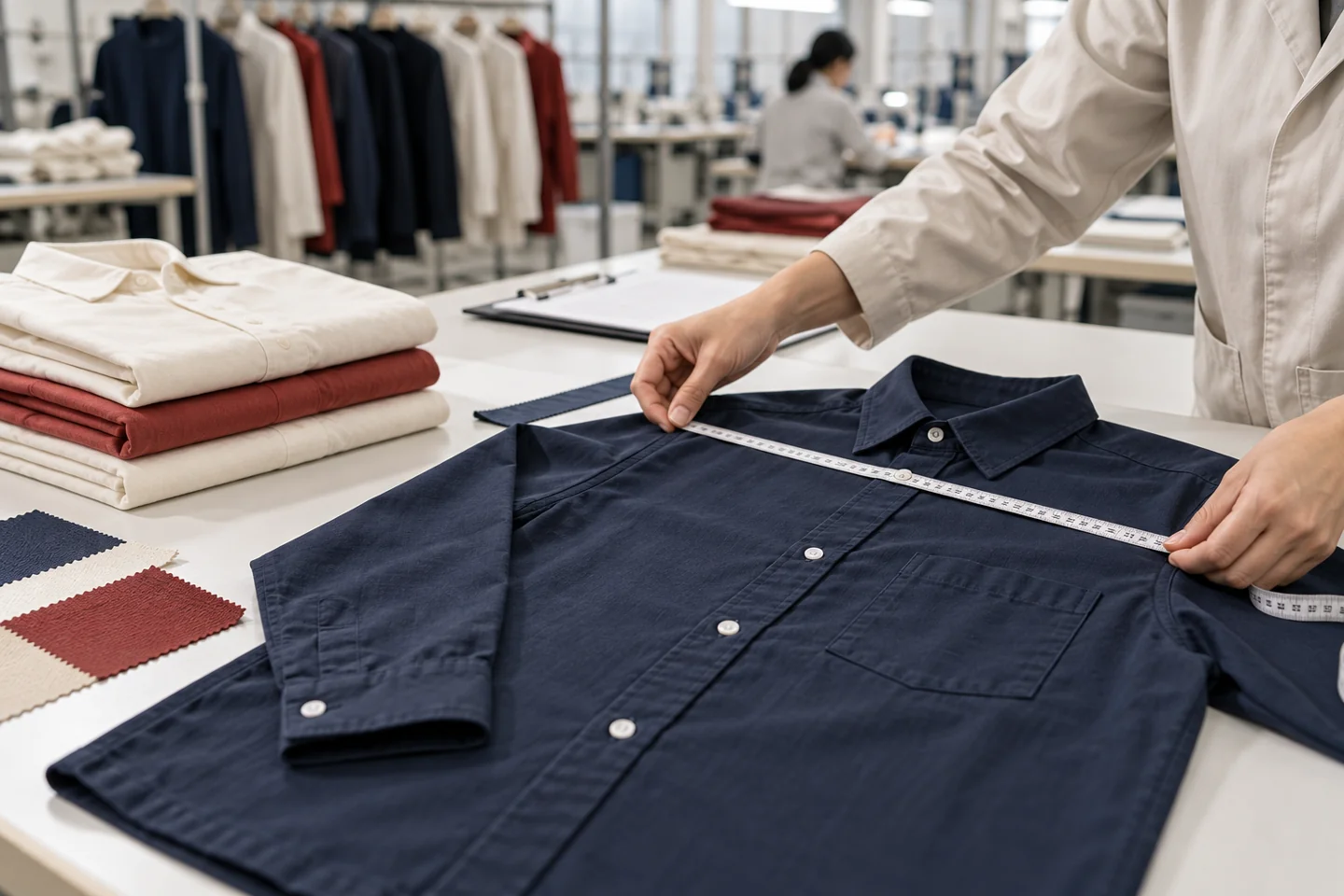
UTS garment and apparel inspection services in China review sampled garments against your tech pack, approved samples and packing instructions. The agreed checks can cover measurements, sewing, appearance, shade, trims, labeling and assortment. A useful report records deviations by style, size or color so your team can act on the findings.
Use these categories as a starting point. The checklist should follow your actual product, intended use and purchase requirements.
T-shirts, polos, sweatshirts and knit garments. Focus on measurements, seams, appearance and specification consistency.
Shirts, trousers, dresses and other woven styles. Review construction, alignment, closures and size measurements.
Layered, lined and performance-oriented styles. Define the relevant construction, trim and functional checks.
Review agreed workmanship and identification details. Confirm product-specific safety checks and laboratory requirements separately.
The same measurement can mean different things if the method is unclear. Lock the revision, measuring points, tolerances and approved reference before inspection.
Download the planning checklist
Use the buyer’s point-of-measure diagrams and graded specification. Agree the garment position, any relaxation requirements and the number of pieces to measure by style, size and color.
Evidence to record: Actual measurements, tolerances and the affected size or style.
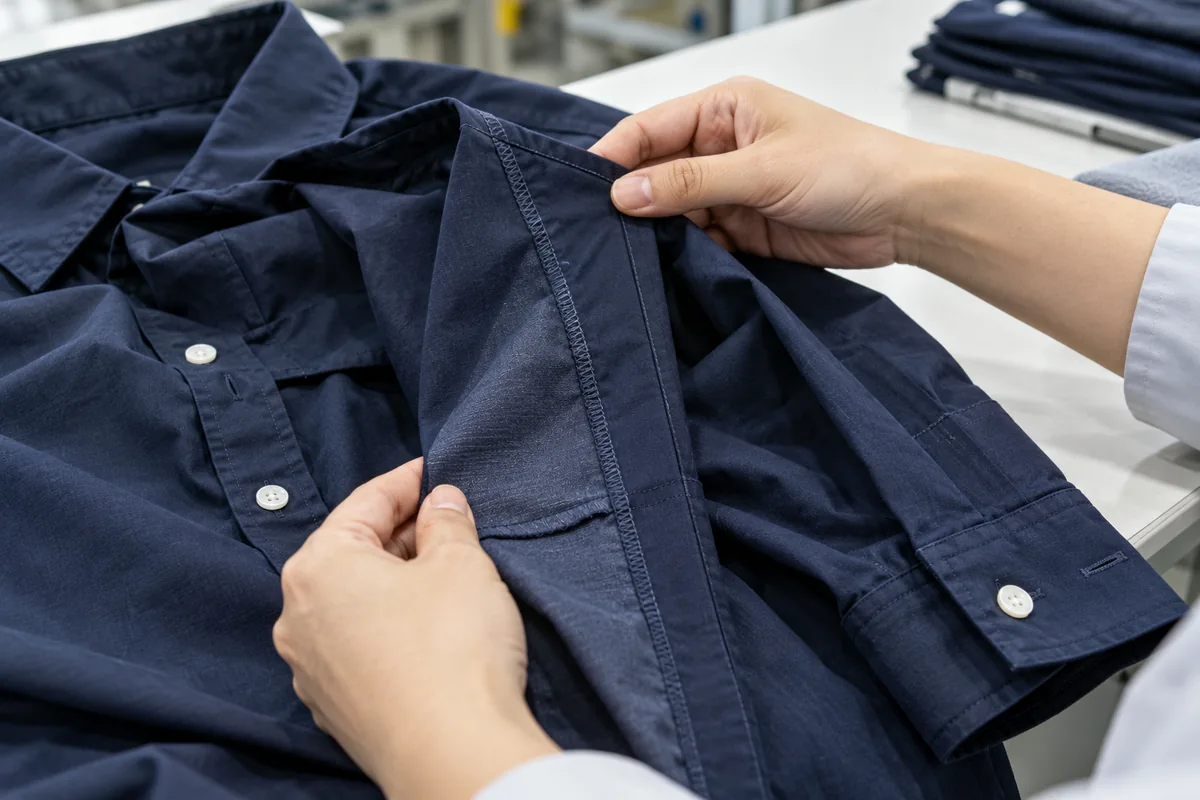
Check seams, stitching, panels, hems, pockets and lining against the tech pack. Look for open seams, skipped stitches, puckering, uneven alignment and other agreed workmanship defects.
Evidence to record: Located defect images and observations linked to the construction requirement.
Compare shade, print placement, embroidery and visible surface condition with approved references. Assess within-garment and sampled piece-to-piece variation under the agreed viewing conditions.
Evidence to record: Reference comparisons and identified appearance or placement deviations.
Check the identity, position and operation of zippers, buttons, snaps, drawcords and accessories where applicable. Confirm any attachment-strength or other special test method in advance.
Evidence to record: Functional observations, incorrect trims and checks that require additional testing.
Compare size, care, fiber-content, country-of-origin and brand-label artwork with the approved instructions. Confirm placement and consistency; an artwork check does not independently verify fiber composition.
Evidence to record: Label mismatches, missing labels and inconsistencies with the order.
Review style, size and color assortments, polybags, barcodes, hangtags, carton marks and quantities against the packing list. Agree any barcode scan or special packing check in the scope.
Evidence to record: Packing observations and sampled assortment or identification errors.
“Measurements failed” is not enough to solve a production issue. The report should identify the point of measure, the specification revision, the actual result and which sampled garments were affected.
Record what was checked, what was observed and what remains unresolved. Keep supplier explanations separate from verified inspection findings.
Garment finding / illustrative example. This is a planning example, not a UTS client report or a completed inspection.
Choose the inspection stage based on what you need to learn and when the supplier can still act. Multiple stages can be useful for a new product, a new supplier or a recurring quality concern.
Review fabric, trims, approved samples and specification readiness before bulk production develops.
Explore this serviceLook for recurring sewing, measurement or shade issues while the supplier can still adjust the process.
Explore this serviceAssess accessible finished garments, labels and assortment before the buyer makes the shipment decision.
Explore this serviceReview carton identification, condition and loading against the agreed shipment and handling instructions.
Explore this serviceA clear scope is more useful than an open-ended promise. Sampling, special checks and testing requirements should be agreed before the assignment.
Workmanship sampling and detailed measurement sampling are not automatically the same. Define both. A plan that selects garments from a lot still needs a clear approach to representing different styles, sizes and colors.
Visual inspection and on-site checks do not replace laboratory evidence for fiber composition, colorfastness, dimensional change after laundering, chemical content or other specified performance requirements. Agree the test method and acceptance criteria for any separate testing program.
Tell us the intended market, product use and buyer requirements so the proposed inspection scope can identify any separate testing or documentation needs.
Compare product inspection and testingAgree the report content and delivery timing when booking. The result should make the scope, observations and limitations easy to review.
| Report component | What it should record | How it helps your decision |
|---|---|---|
| Style & lot identification | PO, styles, sizes, colors, quantities and the documents used. | Check that the evidence relates to the correct bulk order. |
| Measurement records | Points of measure, tolerances, results and sampled size identifiers. | Locate which sizes or measurements need supplier investigation. |
| Workmanship & packing | Observed defects, photographs, labels, assortment and carton findings. | Give the production team a clear, traceable correction request. |
| Scope limits & follow-up | Unmeasured items, inaccessible goods, missing references and open questions. | Decide whether to clarify, correct, sort or arrange further inspection. |
Garment inspection cost depends on the factory location, number of styles, size and color mix, sample quantities, measurement workload and special checks. A multi-style order with detailed measurement requirements can need more time than a simple single-style order. Request a quote that states what is included and how any follow-up visit will be charged.
Send your order details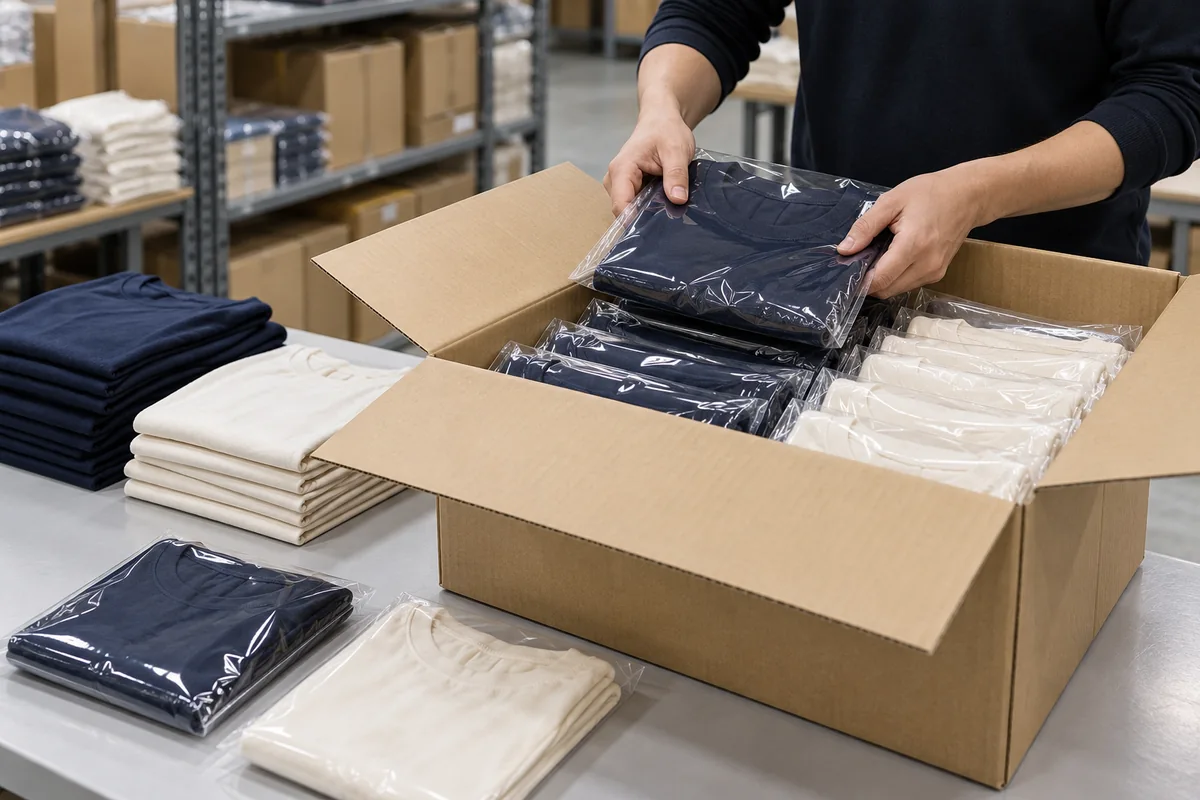
Practical answers for planning the scope, timing and follow-up.
The agreed checklist can include workmanship, dimensions, visual appearance, trims, labels, quantity and packing. Use the approved tech pack and samples to define what is acceptable, what must be measured and which special checks are required.
A current tech pack is strongly useful, particularly for construction and measurement checks. If it is incomplete, send the available size chart, approved sample, photos and order instructions so the team can identify the gaps before the visit.
Only if that coverage is agreed in the scope. Specify the number of measurement samples for each style, size and color. Do not assume that a general workmanship sample means every possible variant receives detailed measurements.
There is no single value suitable for every order. The buyer should agree the lot definition, inspection level, defect classifications and acceptance criteria according to the product and risk. Safety-related requirements and contractual requirements need explicit treatment.
A visual check can compare appearance and label information with your requirements, but it does not establish fiber composition or colorfastness. Those questions generally require specified test methods and, where appropriate, laboratory testing.
The report should record the requirement, actual observation and affected sampled garments. The buyer can request supplier investigation, correction or sorting and then decide whether re-inspection is necessary. Do not treat a supplier’s promise to repair as verified completion.
Send the order breakdown and factory location. The scope and practical inspection time depend on the styles, quantities, measurement work and packing requirements. UTS can review the details before confirming availability and the quotation.
Tell us what you are sourcing, where the factory is and what matters most. UTS will review the details with you before the scope and booking are confirmed.
inquiry@utsinspection.comWhatsApp +86 13631323051Have drawings, a tech pack or packing instructions?
Attach them to your email so the team can review the requirements.