Tel
+852-61343425
We check baby cribs, toys, plush and baby clothes at your factory in China or Asia — before you pay the balance, before the goods ship. You get a photo report with real measurements within 24 hours.
CNAS-accredited inspection body, ISO/IEC 17020. Full-time engineers, not freelancers.
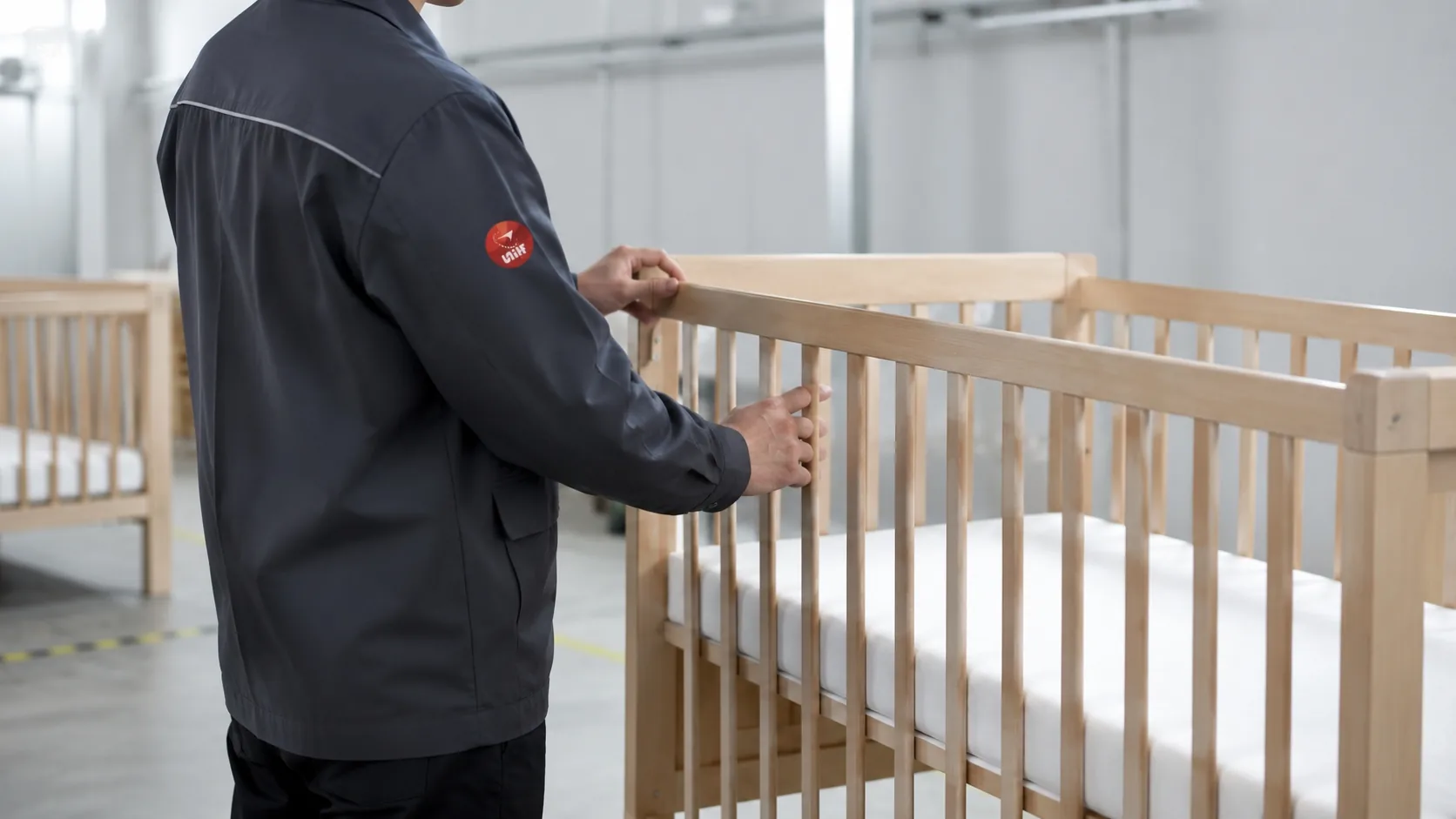
Kids under three put everything in their mouth. So a loose button, a slat gap that is a few millimetres too wide, or a latch that slips is not a small quality issue. It is a choking, entrapment or collapse hazard.
And the bill lands on you. One safety finding can mean a refused shipment, a platform delisting, or a recall in your destination market — long after the factory has been paid.
That is why baby products get their own checklist, their own gauges and their own defect rules. We check against the standard of the market you ship to. Not a generic once-over.
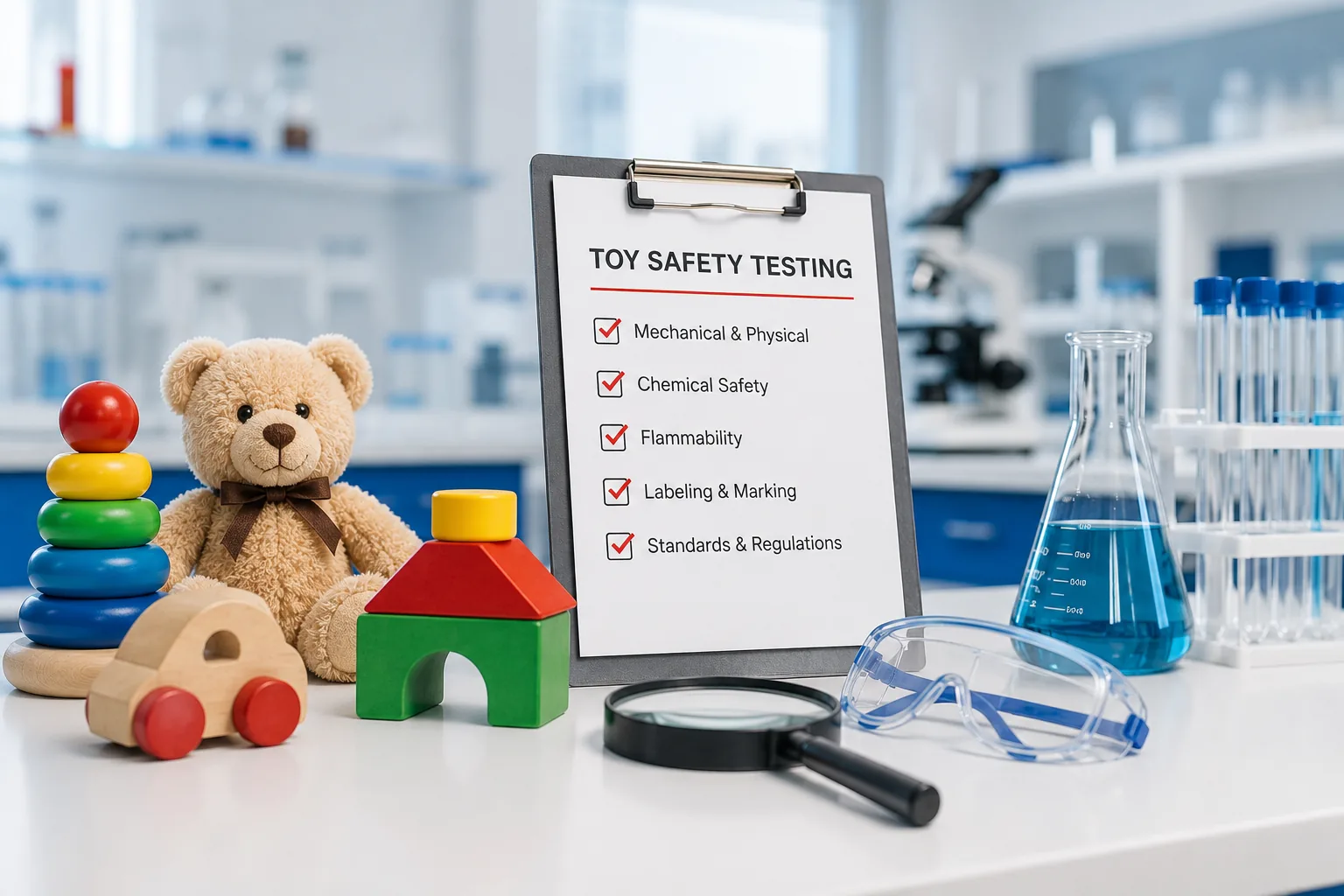
Four situations we see every week. If one of them sounds like you, an inspection pays for itself.
You have no history with this factory. The samples looked great — but samples are made by their best worker. We check what production actually looks like before you wire the balance.
Last shipment had problems, the factory promised they fixed it. A during-production inspection tells you whether the fix actually held — while there is still time to act.
Once the money is gone, your leverage is gone. A final random inspection while the goods are still at the factory is the last cheap checkpoint you have.
A failed inspection, a rework, and now they say everything is fine. We go back and re-check the corrected quantity under the same checklist — so "fixed" means measured, not promised.
Real findings from baby product inspections — and what each one would have cost you at destination.
The US limit for full-size crib slats is 2⅜ inches — about 60.3 mm. We gauge every required opening on every sample. One over-wide gap is an entrapment hazard, and it can fail the whole shipment.
A folding mechanism that works once tells you nothing. We open and close it for the full cycle count, then check every locking point again. A latch that slips or half-engages goes in the report as a safety finding, not a cosmetic remark.
We check brackets, welds, bolts and support bars against your approved drawing, then apply the specified load. If the support bends, shifts or loosens afterwards, that is a collapse risk no buyer can ship.
Anything that drops fully into the small parts cylinder is a choking hazard. We also pull and twist eyes, noses and appliqués at the specified force — because parts that come off during play count too.
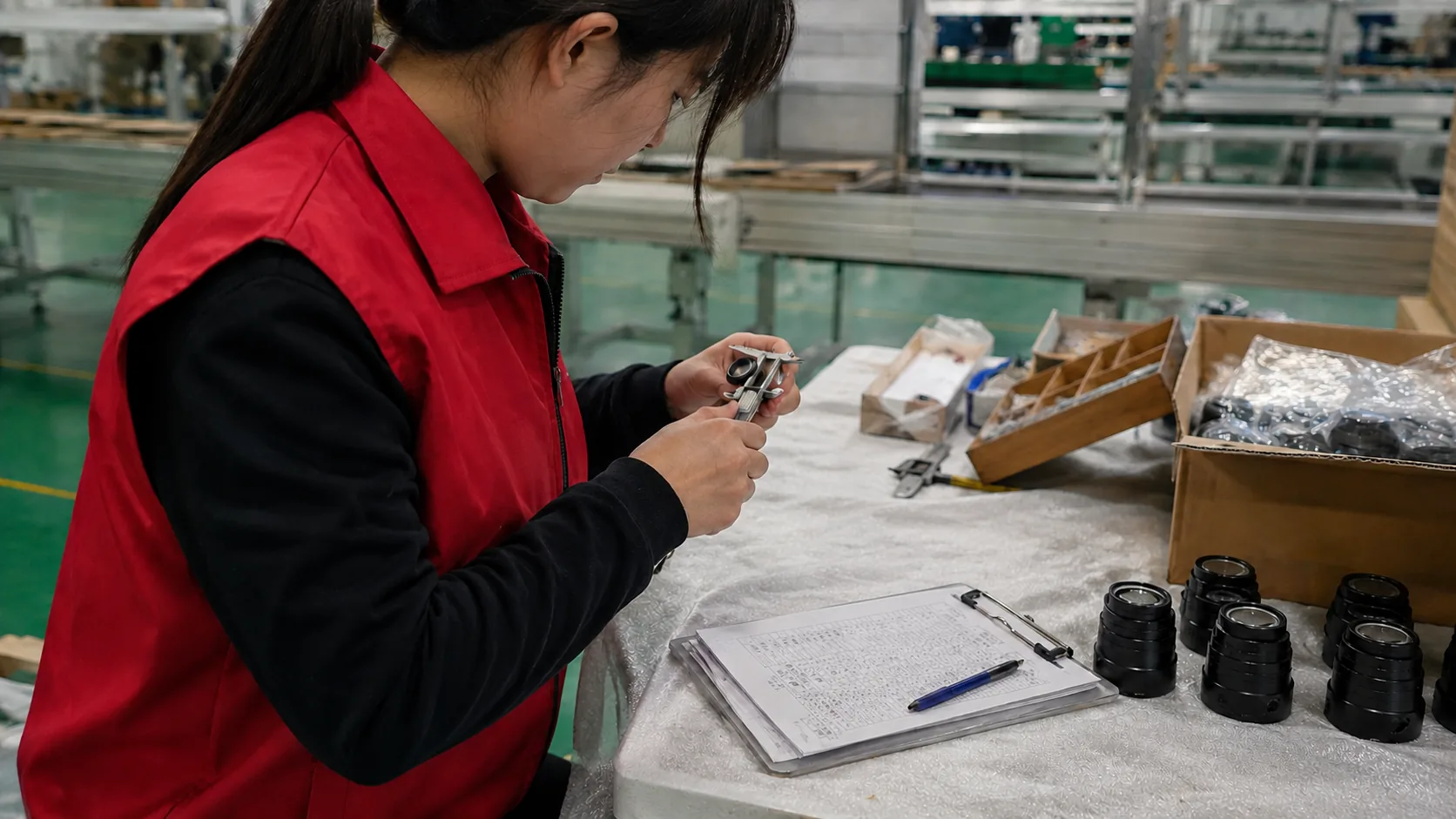
Cracked slats, bad welds, burrs on hardware, rough finish. Every finding gets close-up and overall photos, a measurement, and a defect classification against your approved checklist.
A wrong age mark, tracking label or warning statement blocks customs clearance and retail listing — even when the product itself is perfect. We check every label against your approved artwork.
Send us your PO, your approved sample and your checklist. We confirm the scope, the standard edition and the price in writing — before you commit to anything.
The checklist is built per product category, destination market, purchase order and approved sample.
Full-size cribs, non-full-size cribs, folding cots and bedside sleepers. Assembly against the manual, frame stability, slat spacing, mattress support, latching hardware, finish and labels. See our baby crib inspection checklist for the full scope.
Small parts, tension and torque on attachments, seams, battery compartments, needle detection on stuffed items, age grading and warning labels.
Loose attachments, seam strength, snap and zipper function, needle detection, care and fibre labels, and fabric checks against the approved sample.
Assembly correctness, stability, hardware completeness, surface finish, dimensions against drawings, and packaging that protects the product in transit.
The inspector works from your approved files — PO, specification, drawings, approved sample and checklist. Nothing is improvised.
Product category, destination market, standard edition, sampling plan and defect rules are locked in before any unit is touched.
Cribs and furniture go together exactly per the supplied instructions. No extra parts, no tricks to make a weak product look stable.
Frame wobble, latch cycles and mattress-support load are checked with the specified forces. Actual results get recorded — not "seems fine".
Slat spacing and other openings are measured with calibrated tools or go/no-go gauges. The largest measured opening goes in the report, with the tool and position.
Attachments are tension- and torque-tested at the specified load. Anything that separates goes into the small parts cylinder for a choking-hazard call.
Tracking labels, warnings, age marks, registration cards, carton marks and barcodes are verified against your approved artwork.
Inspections are priced per man-day. The number depends on the factory location, the order size and how much your checklist covers.
Travel fees. Getting our inspector to the factory is already in the quote. You will not see a travel line item afterwards.
Weekend surcharge. Production does not stop on Saturday, and neither do we. Same price, any day of the week.
Written quote before you commit. Scope, standard edition, sampling plan and price — confirmed in writing first. Book through our order portal or by email.
The same crib is legal in one country and refused in another. So before the inspection we ask you one simple question: where is this shipment going?
Then we check against that market's standard, in the exact edition that applies today. Not a generic template from years ago.
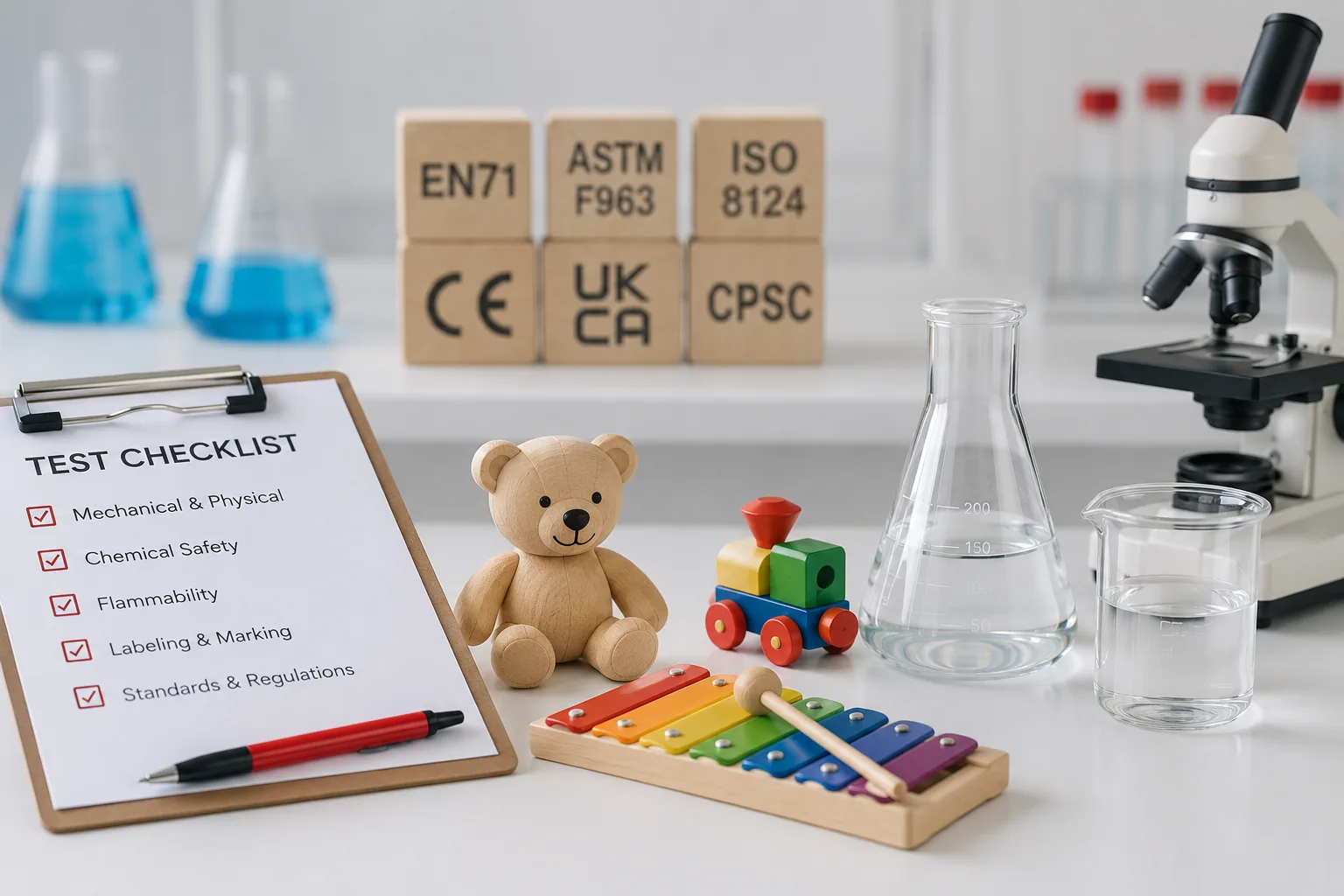
Full-size cribs: 16 CFR 1219.2 with ASTM F1169-25. CPSIA labelling, tracking labels and Children's Product Certificate documentation reviewed. Phthalates limited to 0.1% per compound.
EN 71 for toys and childcare articles, REACH for chemicals. The SVHC candidate list updates roughly every two months — we flag which substances apply to your materials.
ISO 7175-1/-2 for children's cots and folding cots (internal length 900–1,400 mm), ISO 8124 toy safety series, and ISO 2859-1 sampling plans for the inspection itself.
GB 6675 for China-domestic products — including formaldehyde limits of 75 mg/kg for skin-contact textiles, 20 mg/kg for children under two. Other destination rules confirmed per order.
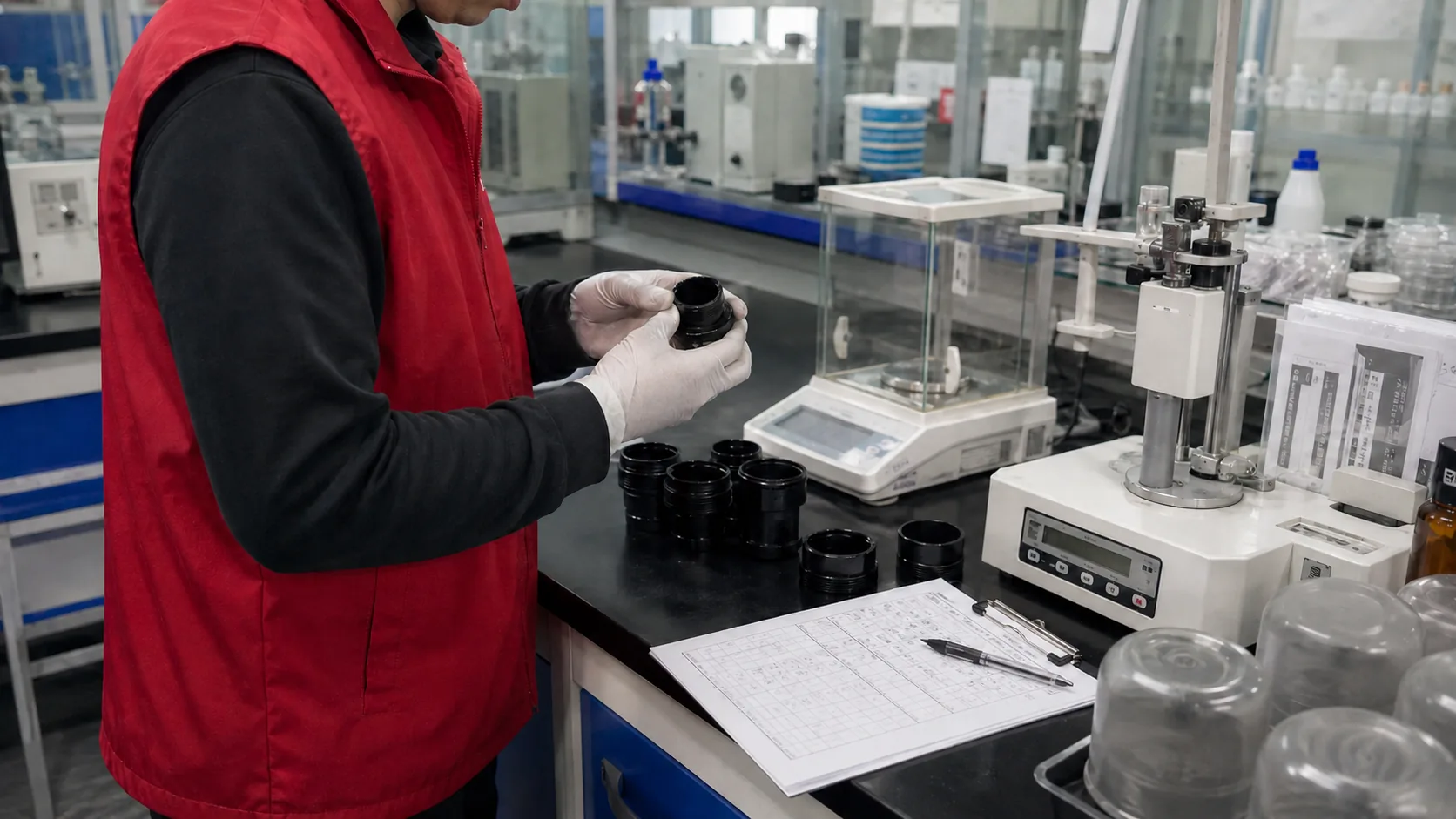
AQL is a sampling system, not a permission slip. The plan defines accept and reject numbers from your lot size — and safety findings are reviewed separately from cosmetic defects, every time.
Say you ship 3,200 cribs. We do not check ten of them and hope for the best. The ANSI/ASQC Z1.4 sampling table tells us exactly how many cartons to open and how many units to check, based on your lot size.
Every finding then gets a defect classification — critical, major or minor — and the accept or reject call follows the numbers agreed with you before the inspection.
And when every single unit matters, a 100% full inspection checks each piece individually. The report states the actual number checked and the actual number affected.
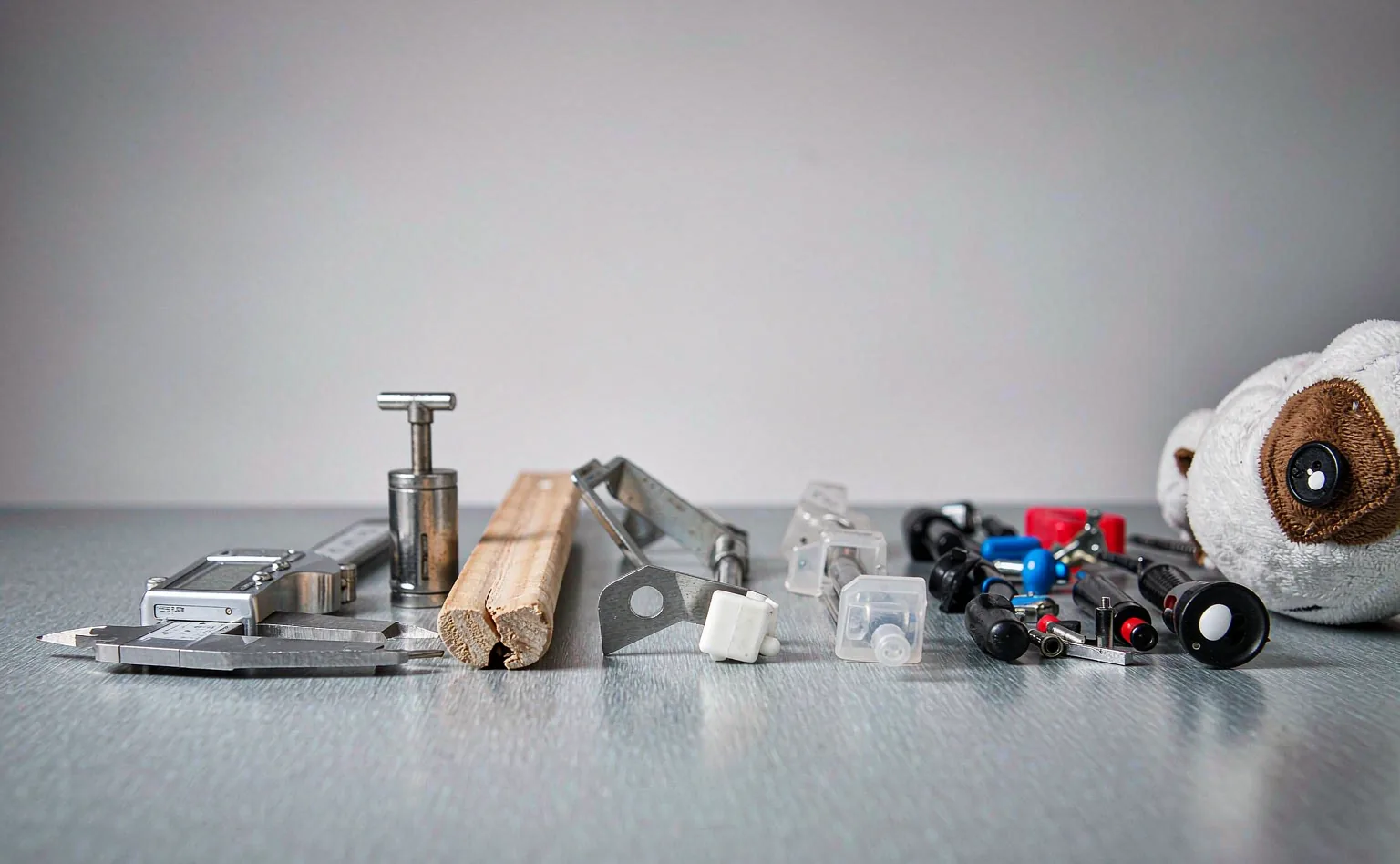
Any safety hazard — entrapment gap, choking part, sharp edge, failed latch. One critical finding fails the lot.
Defects a customer would notice or return: wobble, cracked parts, wrong dimensions, poor finish.
Small cosmetic deviations from the approved sample that do not affect function or safety.
Lead in paint, phthalates in plastic, formaldehyde in fabric — you cannot see them, and neither can our inspector. These go to a laboratory. We arrange the testing through CNAS-accredited labs, matched to your product and destination market.
One honest note: on-site inspection catches production defects and spec deviations. It does not replace laboratory testing or certification — and we will tell you exactly which checks belong where before you book. More in our children's product safety testing guide and on the toys & children's products testing page.

Delivered as PDF within 24 hours of completion. Every finding shows the method, the measured result and the acceptance requirement — so your factory cannot argue with it, and you can decide with confidence.
UTS records the findings and gives the recommendation. The release decision — approve, hold, rework, re-inspect or reject — stays with you. Want us to check a pre-production sample first? That is our sample evaluation service.
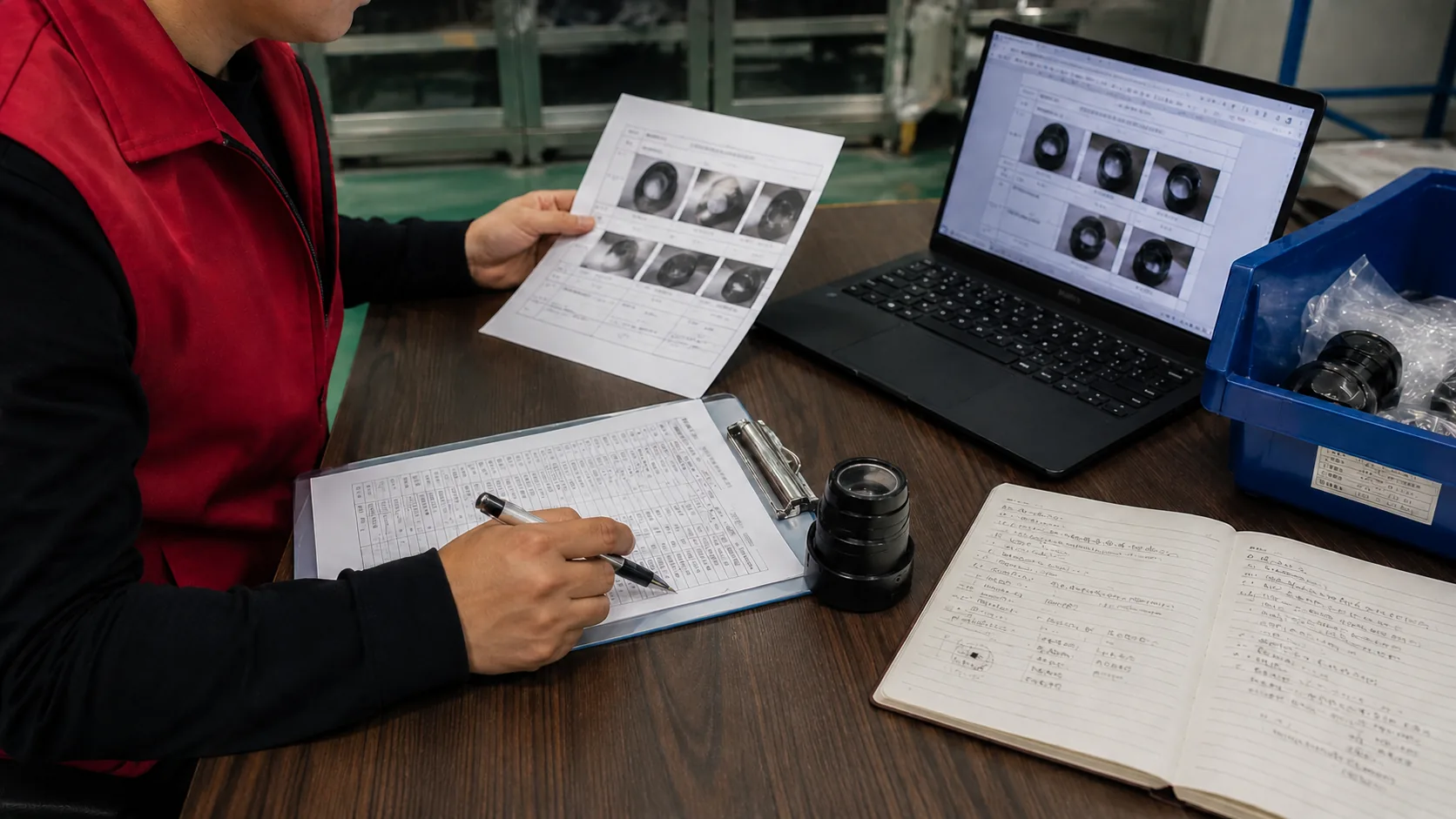
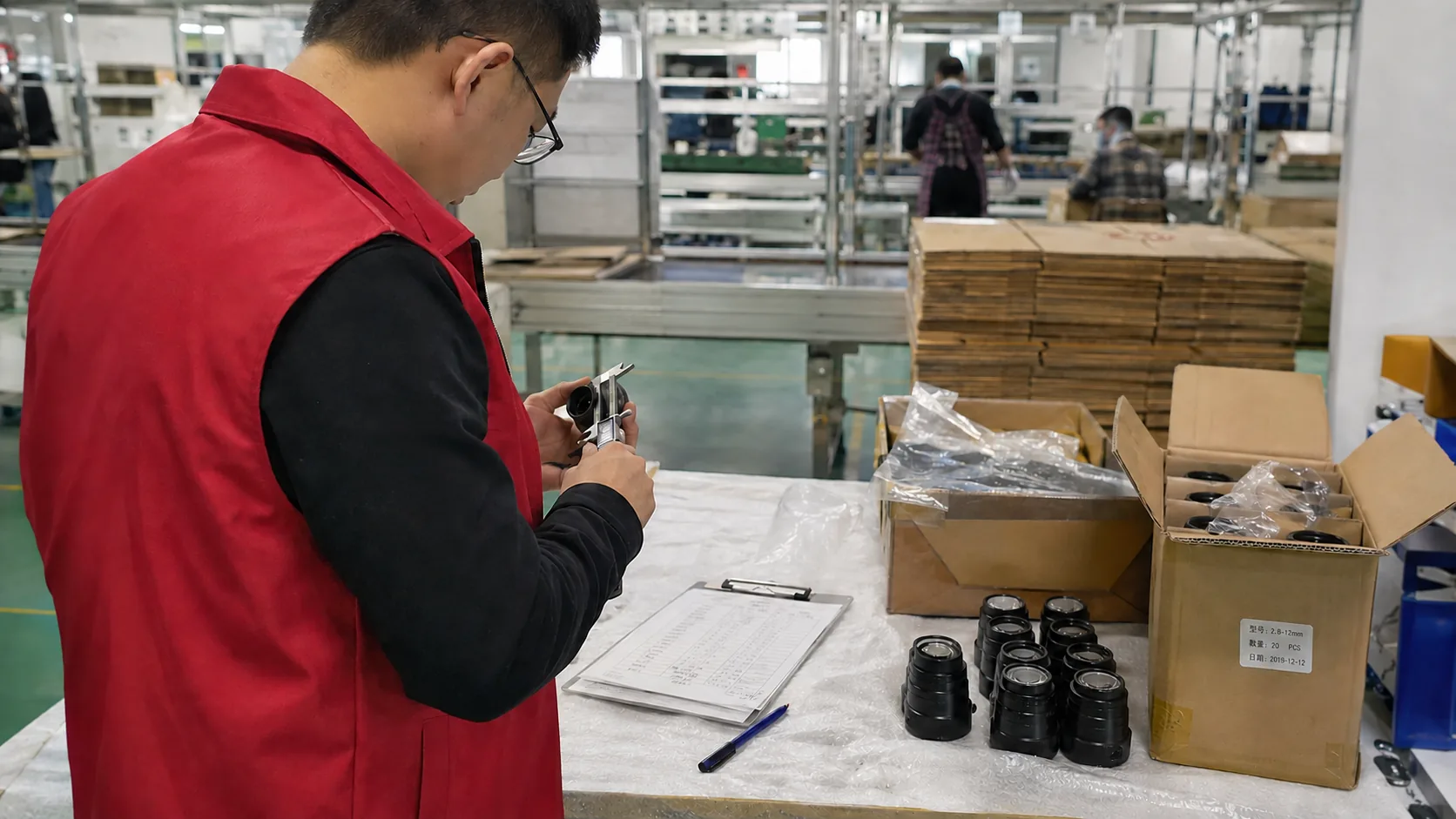
Wrong materials, wrong dimensions, wrong assembly methods get caught before the same mistake spreads through the full order.
Verifies the factory actually corrected the earlier finding and that production still matches the approved sample.
The shipment decision point. AQL sampling on finished, packed goods — the report behind your release or hold.
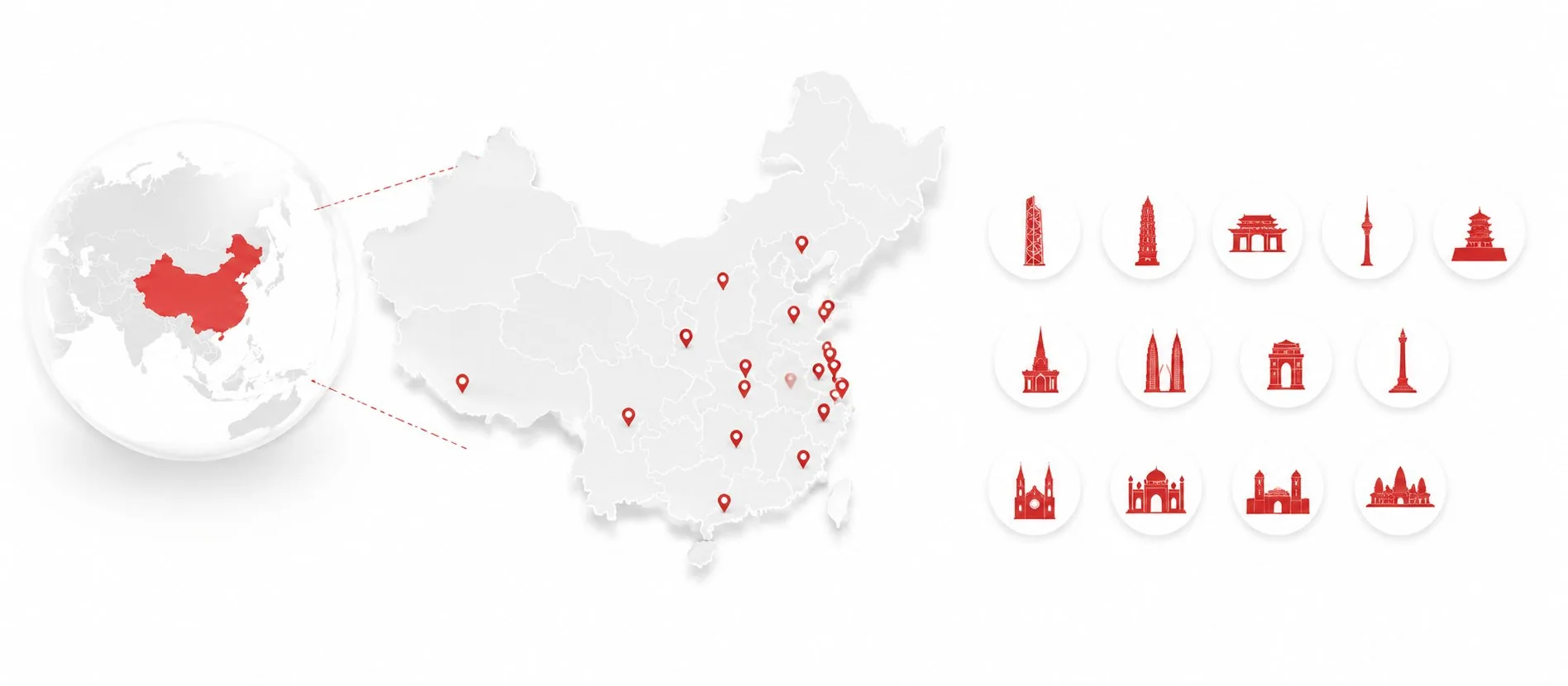
Most baby products are made in Guangdong, Zhejiang, Fujian and the other coastal manufacturing provinces. Our engineers are already there — and across the rest of Asia when your supply chain is.
The more complete the file, the sharper the inspection. Everything below becomes part of the inspector's working checklist.
Purchase order, specification sheet, approved drawings, and the approved or golden sample the factory must match.
The assembly manual, plus any approved test loads, forces, cycle counts, tolerances and torque values you want applied.
Destination market, exact product category, the applicable regulation and standard edition, and your defect classification definitions.
Approved labels, tracking information, warning statements, registration cards, carton marks and barcode requirements.





Same engineers, same reporting standard — for the rest of your supply chain.
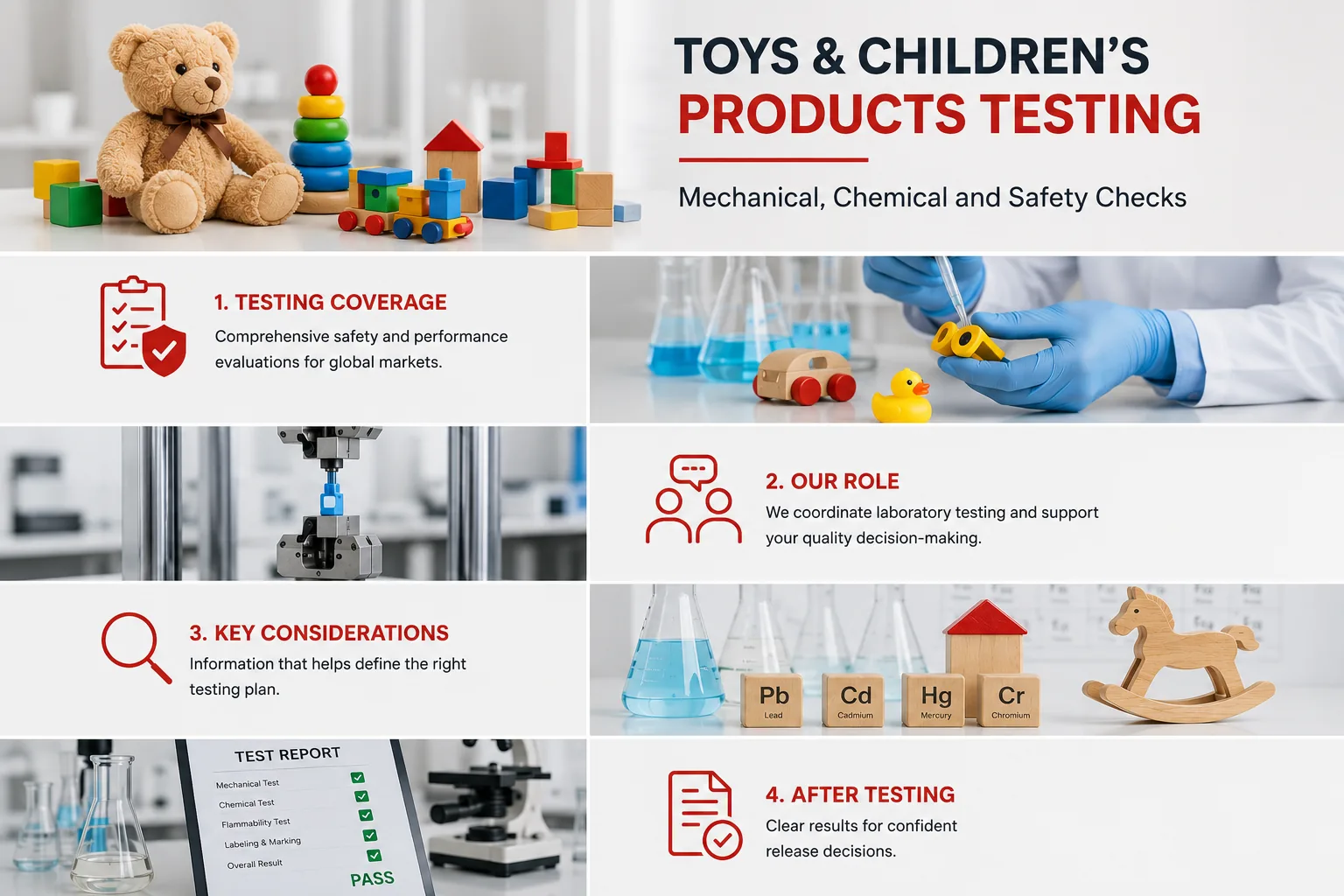
Mechanical, chemical and safety tests in the lab, matched to your destination market.
Learn more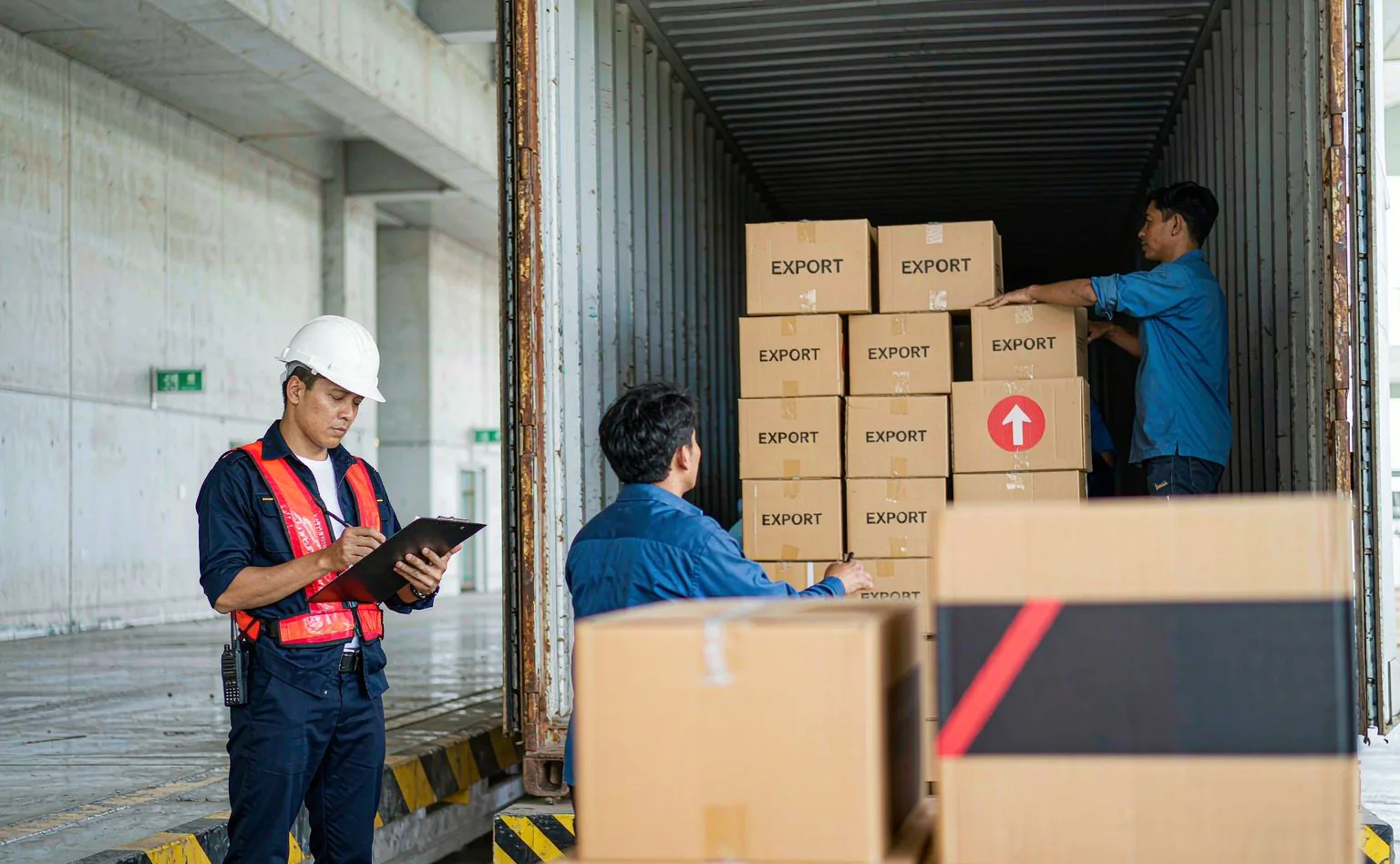
Right goods, right quantity, right cartons — watched as the container is loaded and sealed.
Learn more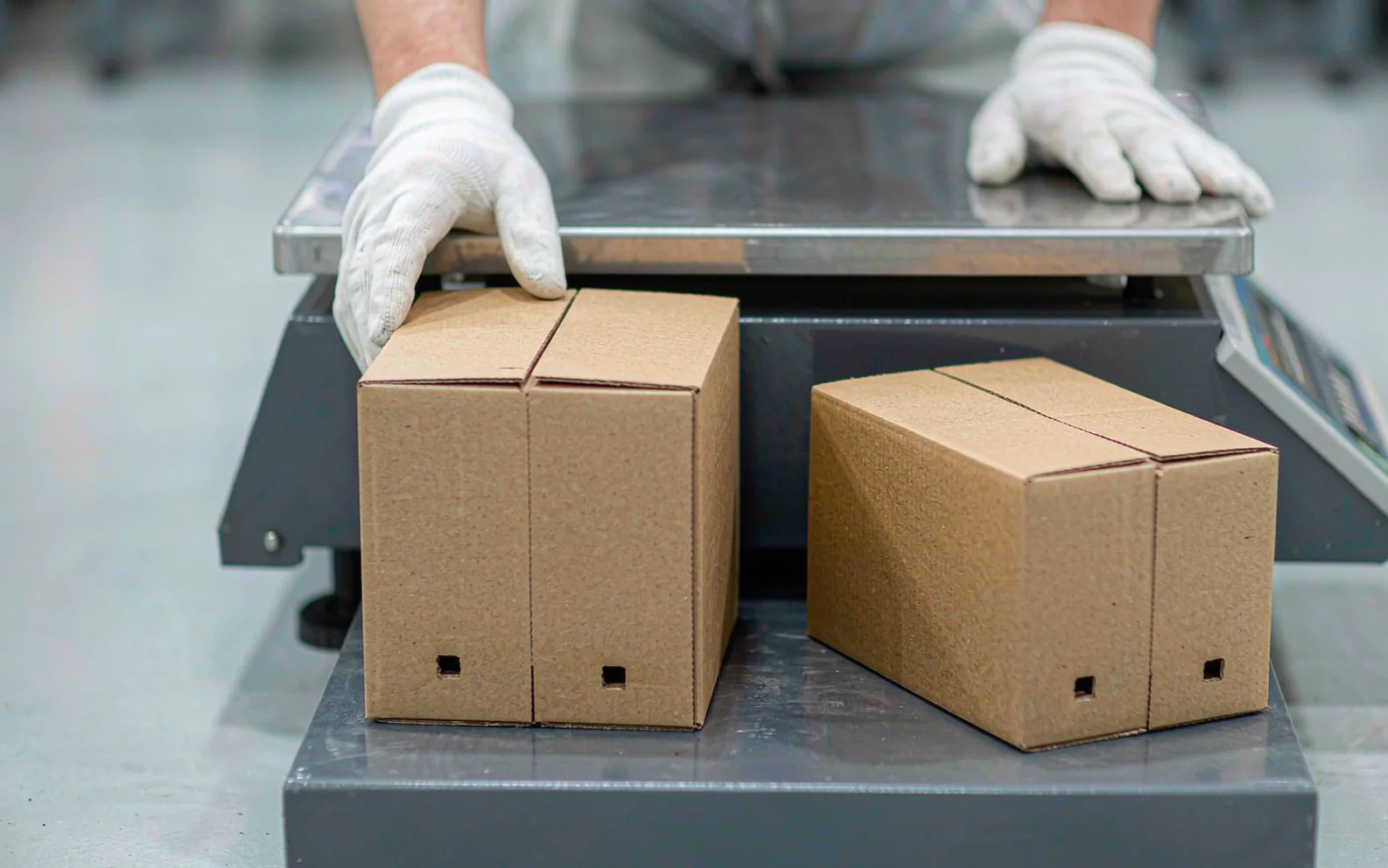
FNSKU labels, polybag rules, carton weight and drop tests before your goods hit the FBA warehouse.
Learn more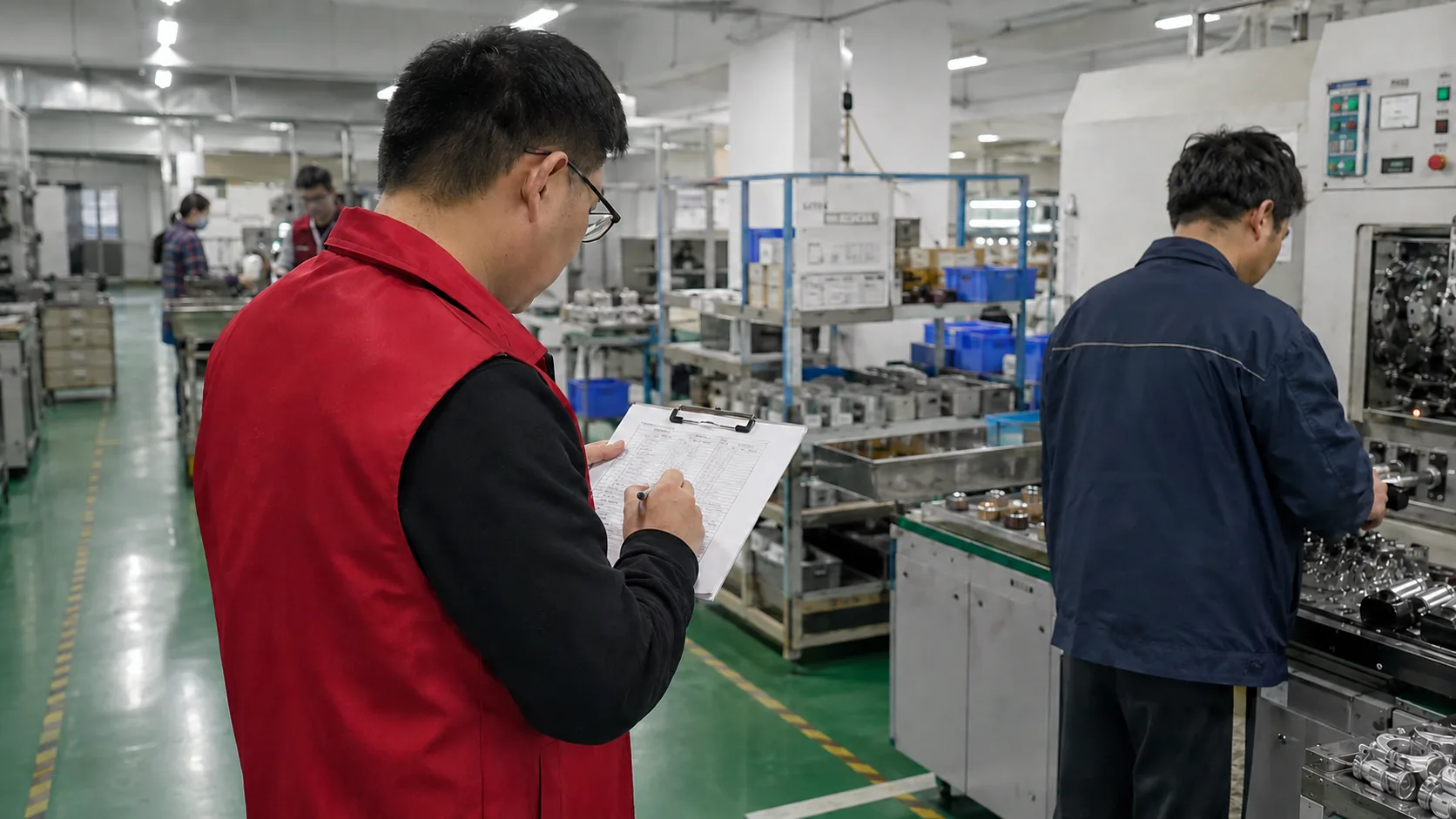
Before you commit to a new supplier, know whether the factory can actually make your product.
Learn moreWe quote per man-day based on the factory location, order size and checklist scope. Travel and weekend work are already included in the quote, and the price is confirmed in writing before you commit.
By default we sample to ANSI/ASQC Z1.4 (ISO 2859-1) with Critical 0, Major 2.5 and Minor 4.0 acceptance levels. Where every unit matters, a 100% full inspection is available and the report states the actual number of units checked.
No. On-site inspection catches production defects and specification deviations. Chemical, migration and standard-clause tests are completed in a laboratory, and the manufacturer or importer remains responsible for the applicable certificate or declaration.
For US full-size baby cribs, 16 CFR 1219.2 currently incorporates ASTM F1169-25, alongside CPSIA labelling. EU shipments follow EN 71 and REACH, cots can be assessed under ISO 7175-1/-2, and China-domestic products follow GB 6675. We confirm the exact standard edition with you before the inspection.
You receive a fail report with photos, measured results and defect classification. The factory reworks the affected goods, we re-inspect the corrected quantity under the agreed scope, and you make the final release decision.
Once we have your product details, factory address and preferred date, an inspector can be on site within 48 hours across China's major manufacturing provinces. The PDF report is delivered within 24 hours of completion.
Yes. Besides 13 provinces in China, UTS covers 13 countries across Asia. Send us the factory address and we confirm availability and the man-day quote for that location.
You do. UTS records objective findings and provides a pass, fail or hold recommendation. The buyer approves, holds, reworks, re-inspects or rejects the shipment.
The purchase order, specification sheet, drawings, approved sample, assembly manual, destination market, applicable standard edition, and the approved labels, warnings, tracking information and packaging artwork.
Tell us the product, the quantity, the factory location and your destination market. We reply with the scope, the standard we will check against, and the price — in writing.