
Food Contact Testing Services
We help buyers define laboratory testing for packaging, cookware, tableware and other food-contact articles. The test plan is based on the material, intended food, contact time and temperature, repeated-use conditions, product variants and destination market.

What buyers should confirm before samples are sent
A laboratory cannot choose an accurate migration or substance test plan from a product photo alone. Material and use information determine the methods and test conditions.
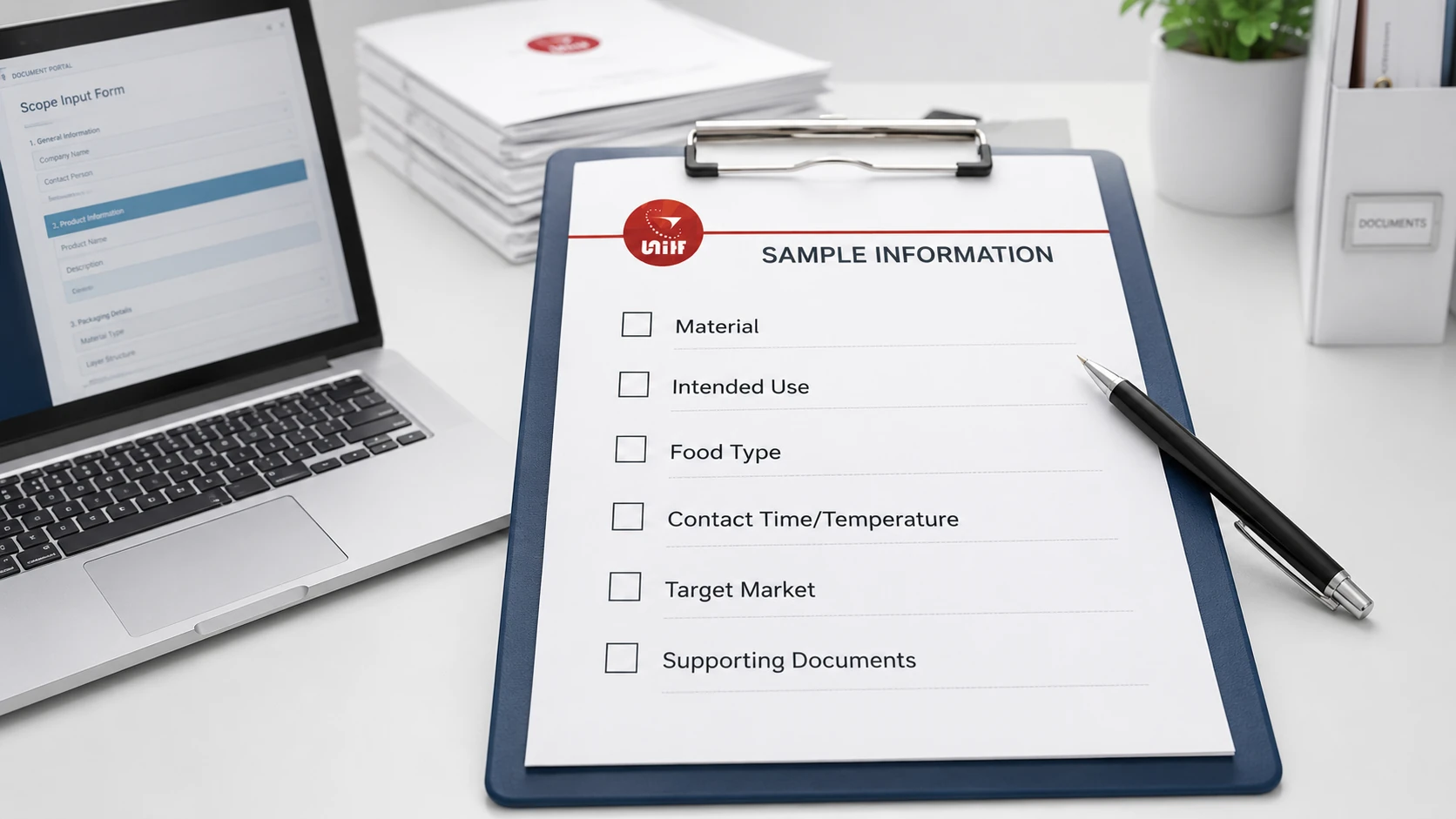
Product identity, material and contact conditions
Our project service team reviews the buyer’s scope and available supplier documents before coordinating the selected laboratory. Unconfirmed assumptions are recorded rather than treated as verified facts.
- Product name, model, dimensions and intended user
- Material composition for each food-contact part
- Coatings, inks, adhesives, colourants and recycled content
- Food type, contact area, duration and temperature
- Single-use, repeated-use, cooking, storage or serving conditions
- Destination markets and available declarations or previous reports
Food-contact materials require different test directions
The same migration method or substance list should not be copied across unrelated materials. The selected laboratory scope should reflect the actual formulation and market rules.
Plastics and coatings
Overall and specific migration, authorised substances, additives, colourants and intended contact conditions may need review.
Metals and alloys
Material grade, surface treatment, corrosion behaviour and migration of relevant elements may be reviewed depending on the article and market.
Ceramic, glass and enamel
Decoration, glaze, rim treatment and migration of relevant elements should be considered for the intended use.
Paper and board
Fibre source, coatings, printing inks, adhesives, grease resistance and possible transfer routes may affect the scope.
Silicone, rubber and elastomers
Formulation, fillers, colourants, volatile or extractable components and repeated-use conditions may require material-specific methods.
Wood, bamboo and composites
Coatings, bonding agents, fillers and mixed plastic formulations should be identified. Product names alone do not establish the material category.

Common test areas and what they can show
Testing should answer a defined question under stated conditions. A broad phrase such as “food contact test” is not enough to define the material, simulant, duration, temperature, analytical method or acceptance criterion.
Overall migration
Evaluates the total non-volatile material transferred under the selected conditions where the applicable framework requires it.
Specific migration
Measures identified substances or elements when restrictions, material composition or risk assessment make them relevant.
Composition and restricted substances
Reviews targeted substances, authorised-use conditions or formulation-related risks within the selected scope.
Sensory and suitability checks
May assess unacceptable changes in taste, odour, appearance or physical suitability when included in the applicable method.
FDA, EU, LFGB and DGCCRF are not interchangeable test certificates
The old page listed four short labels as if they were equivalent standards. The correct route depends on the destination market, material and intended use.

United States
U.S. review may involve applicable FDA regulations, effective food-contact notifications, exemptions or other authorised uses. The test report does not create an “FDA certificate.”
FDA food-contact regulation overview →European Union
Regulation (EC) No 1935/2004 provides the general framework. Good manufacturing practice and material-specific measures, such as the plastics rules where applicable, must also be considered.
European Commission FCM overview →Germany
EU requirements remain central. Germany’s LFGB and BfR recommendations may also be relevant depending on the material. BfR recommendations are scientific guidance, not a universal binding certification standard.
BfR recommendations database →France
EU rules apply together with relevant French provisions and DGCCRF material guidance. Documentation, traceability, labelling and foreseeable conditions of use may be reviewed during official controls.
DGCCRF professional guidance →Food contact testing workflow
Our office team coordinates the scope and sample information. The selected laboratory performs the approved methods and issues the test report.

Requirement review
Confirm market, product, materials, use conditions, variants and available records.
Scope confirmation
Define methods, test conditions, sample quantity, lead time and report language.
Sample receipt
Check model, colour, material identification and sample condition against the request.
Laboratory testing
Perform the selected preparation, migration, analytical or suitability methods.
Report review
Provide results for buyer review and clarify failures, limitations or retest needs.
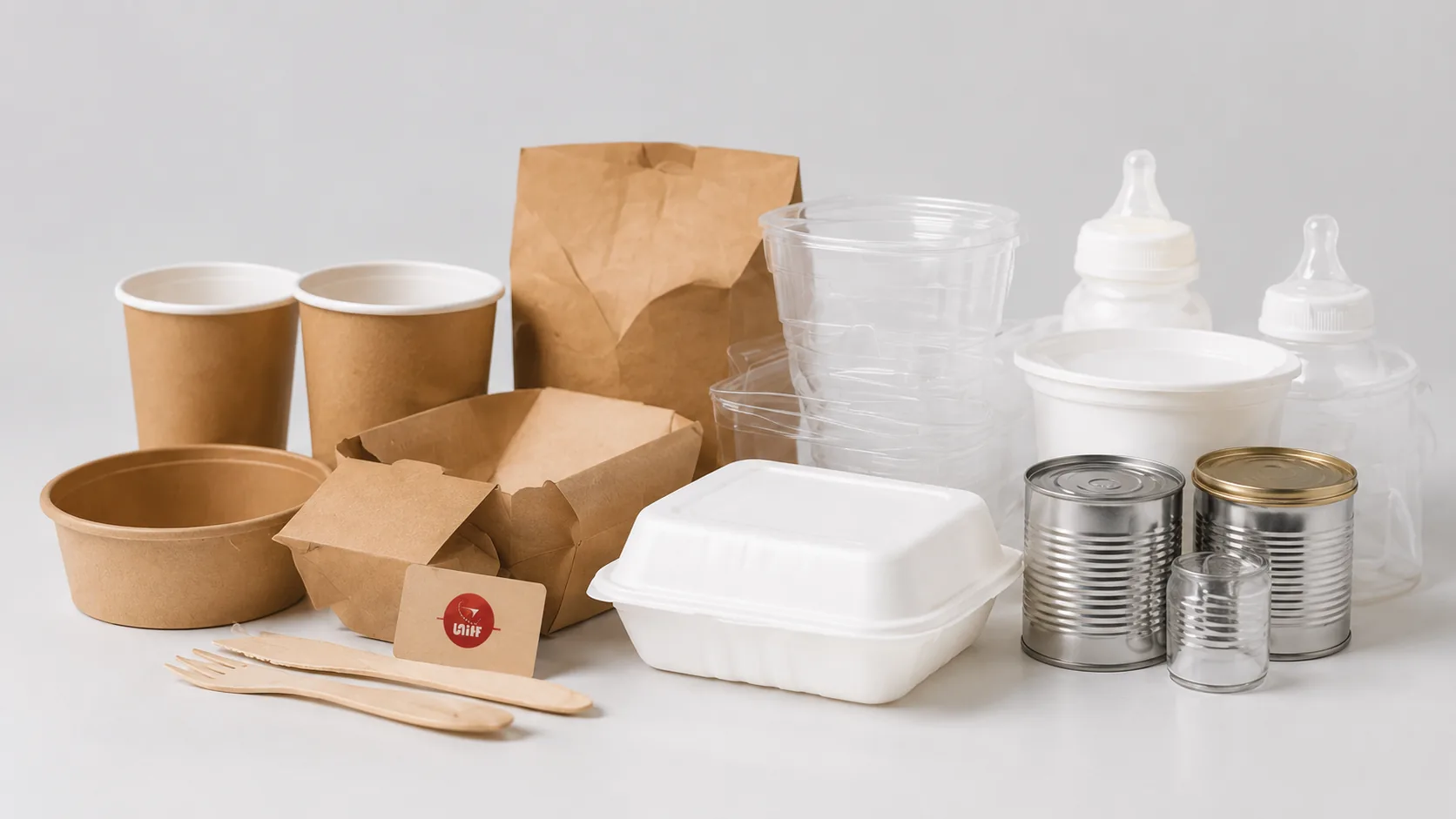
Product variants can change the coverage
A different resin, pigment, coating, adhesive, print layer or food-contact surface may introduce a new testing question. Buyers should not assume that one report covers every model merely because the products look similar.
- List every material and colour variant supplied
- Identify which components directly or indirectly contact food
- Record interchangeable lids, seals, valves and accessories
- Confirm whether recycled or bio-based content is used
- Control production changes after the tested sample is approved
What the laboratory report should make clear
A report supports a defined product and test scope. It should not be treated as blanket approval for untested products, future formulations or every destination market.

Review points
- Sample name, model, colour and received condition
- Material description and tested food-contact parts
- Methods, simulants, temperatures and contact durations
- Measured results, reporting limits and stated criteria
- Photos or sample identification where included
Service boundary
UTS does not issue government approval, FDA registration, an EU declaration of compliance, LFGB certification, DGCCRF approval or legal advice through this service.
Responsibility for market placement, declarations, technical documentation and ongoing production conformity remains with the responsible business operator.
Testing and production inspection should not be confused
Laboratory testing evaluates selected samples against specified methods. Product inspection checks the actual order at a defined production stage.

Sample Evaluation
Review development or approval samples before mass production and record specification, material or workmanship gaps.
View Sample Evaluation →Final Random Inspection
Check completed goods, quantity, appearance, function, dimensions, packaging, labels and barcode readability when included in scope.
View Final Random Inspection →Product Testing vs. Inspection
Understand when laboratory data and on-site production evidence should be used together for shipment-risk review.
Read the comparison guide →Food contact testing questions
These answers clarify scope, sample quantity, market coverage, report limits and failure handling.
Does UTS issue an FDA, EU, LFGB or DGCCRF certificate?
No. UTS helps define the testing scope, coordinates the selected laboratory work and provides the report for buyer review. Market declarations, registrations, authorisations and legal responsibilities remain with the manufacturer, importer or other responsible business operator.
Which information is needed before food contact testing?
The product name, material composition, colours and coatings, intended food type, contact time, contact temperature, repeated-use conditions, target market, model variants and available supplier documents should be provided. Missing information can change the test plan.
Can one report cover every colour, material and market?
Usually not. A report covers the tested samples, identified materials, selected methods and stated conditions. Different colours, coatings, formulations, food-contact surfaces or destination markets may require additional assessment or testing.
How many samples are required?
Sample quantity depends on the material, product size, number of food-contact parts, destructive methods, replicate requirements and market scope. Our project service team confirms the selected laboratory requirement before sample dispatch.
What happens if a sample fails a migration or substance test?
The buyer and supplier should review the failed parameter, affected material, formulation or coating and the tested conditions. After corrective action, the selected laboratory can confirm whether a targeted retest or a new broader test plan is appropriate.
Send the material and intended-use information first
Include product photos, model numbers, component materials, coatings, intended food, time and temperature, target market, available declarations and previous reports.