Toy Inspection
We check your toys at the factory before they ship — small parts, sharp edges, seams, labels, packaging. Need lab reports for the US, EU or other markets? We arrange the testing with the right laboratory too.
CNAS-accredited to ISO/IEC 17020 · Independent since 2006 · Report within 24 hours

What We Check at the Factory
Every visit follows your checklist and an AQL sampling plan — ANSI/ASQ Z1.4, with Critical 0.0 / Major 2.5 / Minor 4.0 as the usual pass lines.
Anything that drops fully into the small-parts test cylinder (31.7 mm across) may fail on toys made for under-3s.
Checked on toys pulled from the production line — not just on the perfect sample the factory keeps in the meeting room.
Cord lengths, closing forces, pinch points and structural strength, measured against the clauses for your market.
We pull them with a force gauge — 15 lbf (about 67 N) for 10 seconds, as ASTM F963-23 requires. If it comes off, it may fail related safety requirements.
Age labels, tracking labels, polybag warnings and carton marks. Every checked barcode must scan — 100% readability.
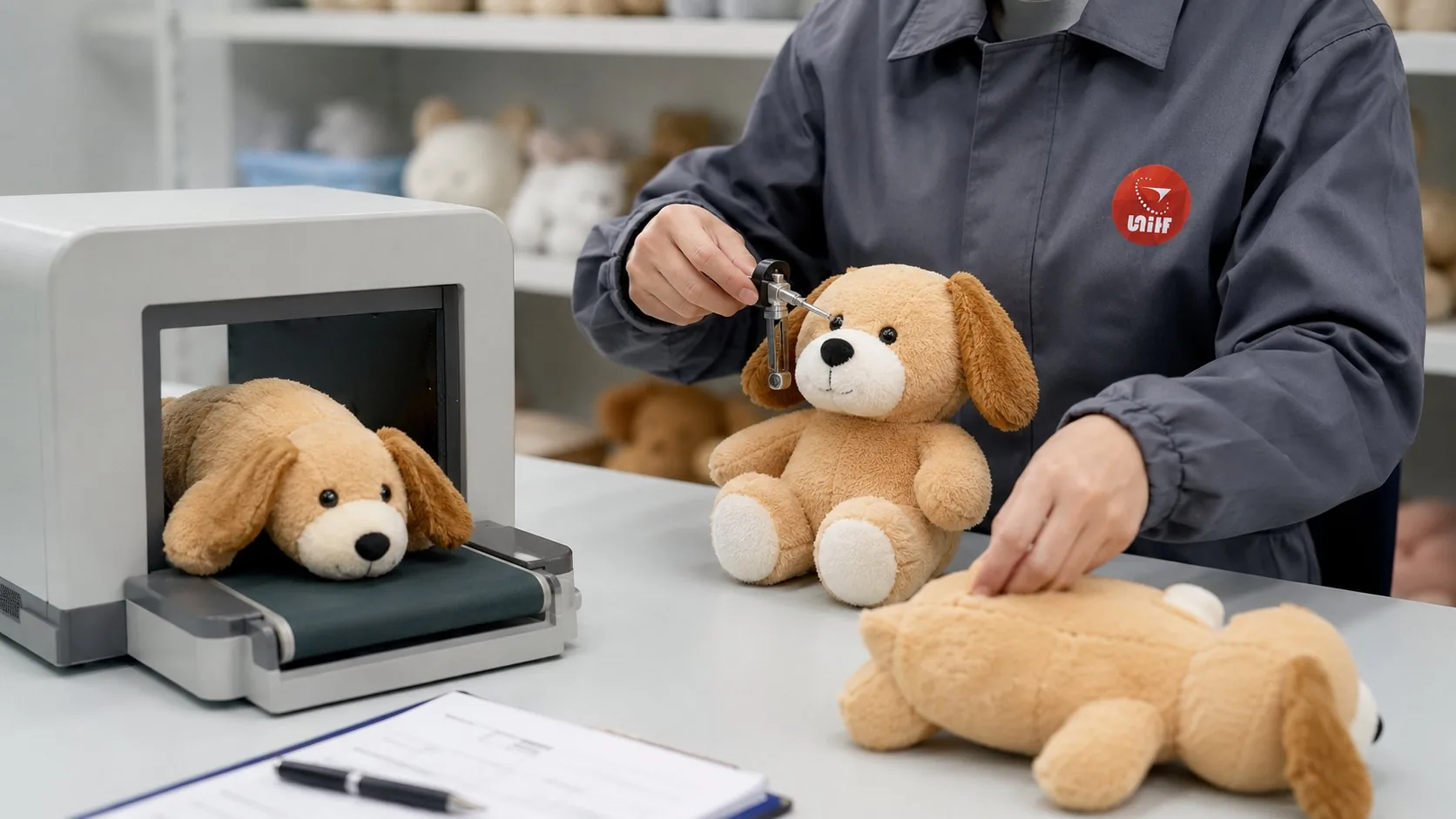
The Bent Needle Inside the Teddy Bear
Our inspector was scanning plush bears at a factory in Yangzhou when the needle detector alarmed. Inside the filling, workers found a bent sewing needle. The whole batch went back for rework and the shipment slipped 15 days.
If that bear had shipped, a toddler could have swallowed the needle. That is why every finished plush toy passes through a metal detector before packing — any ferrous metal of 1.0 mm or more, or 1.5 mm for stainless steel, is treated as a fail — EN 71-1 and ASTM F963 both require soft filling to be free of needles and sharp metal fragments.
How We Judge Choking Risks
The small-parts cylinder is 31.7 mm wide and 57.1 mm deep. A part that falls in completely, without any force, is a choking hazard. But children bite and pull toys apart, so we tug and twist parts first — then test whatever comes loose.
Age labels decide how strict the rules are. Under 3: no small parts, no sharp edges at all. Ages 3 to 6: small parts only with a warning label. A missing or wrong age label already counts as a fail in market surveillance checks.
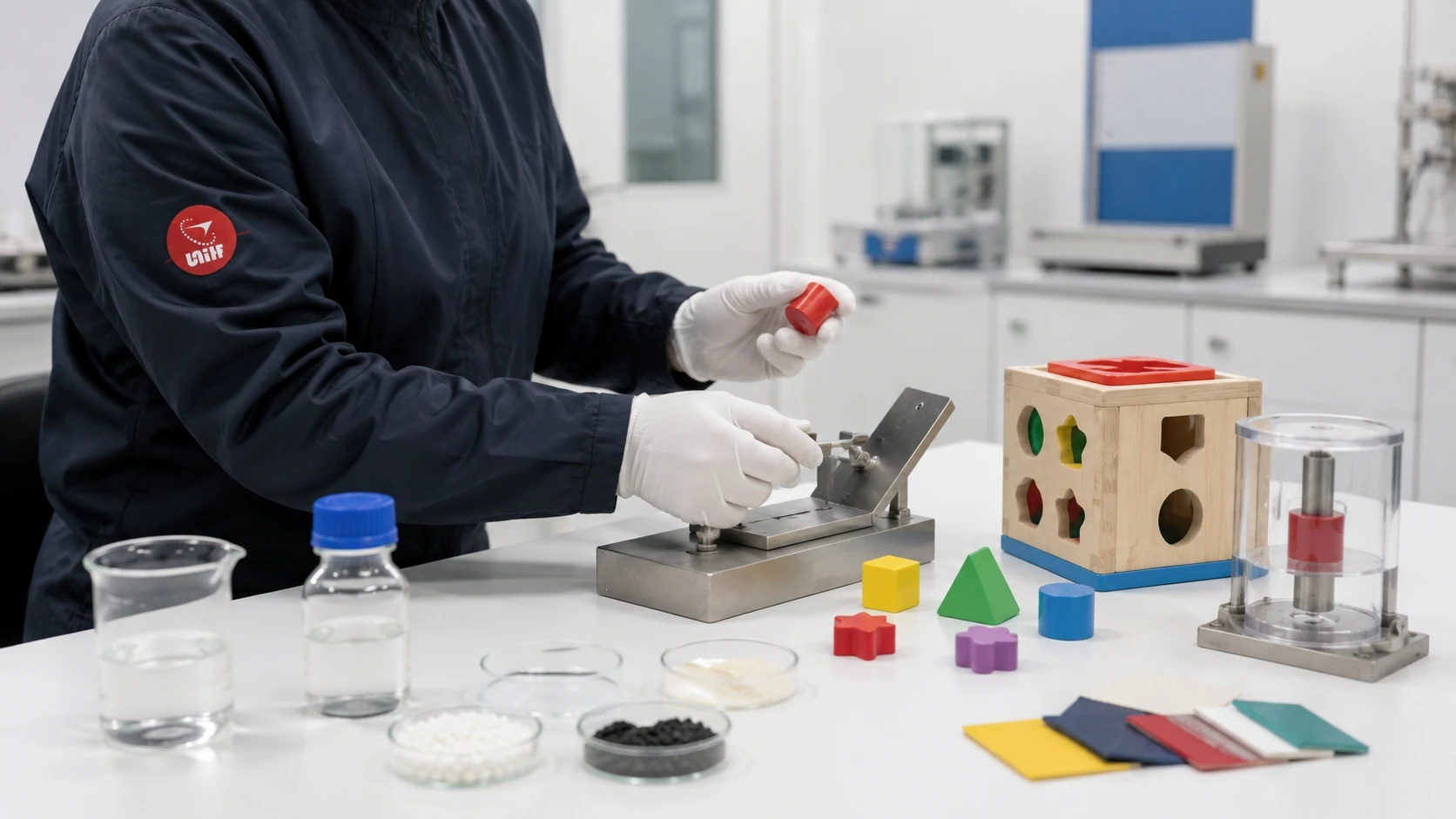
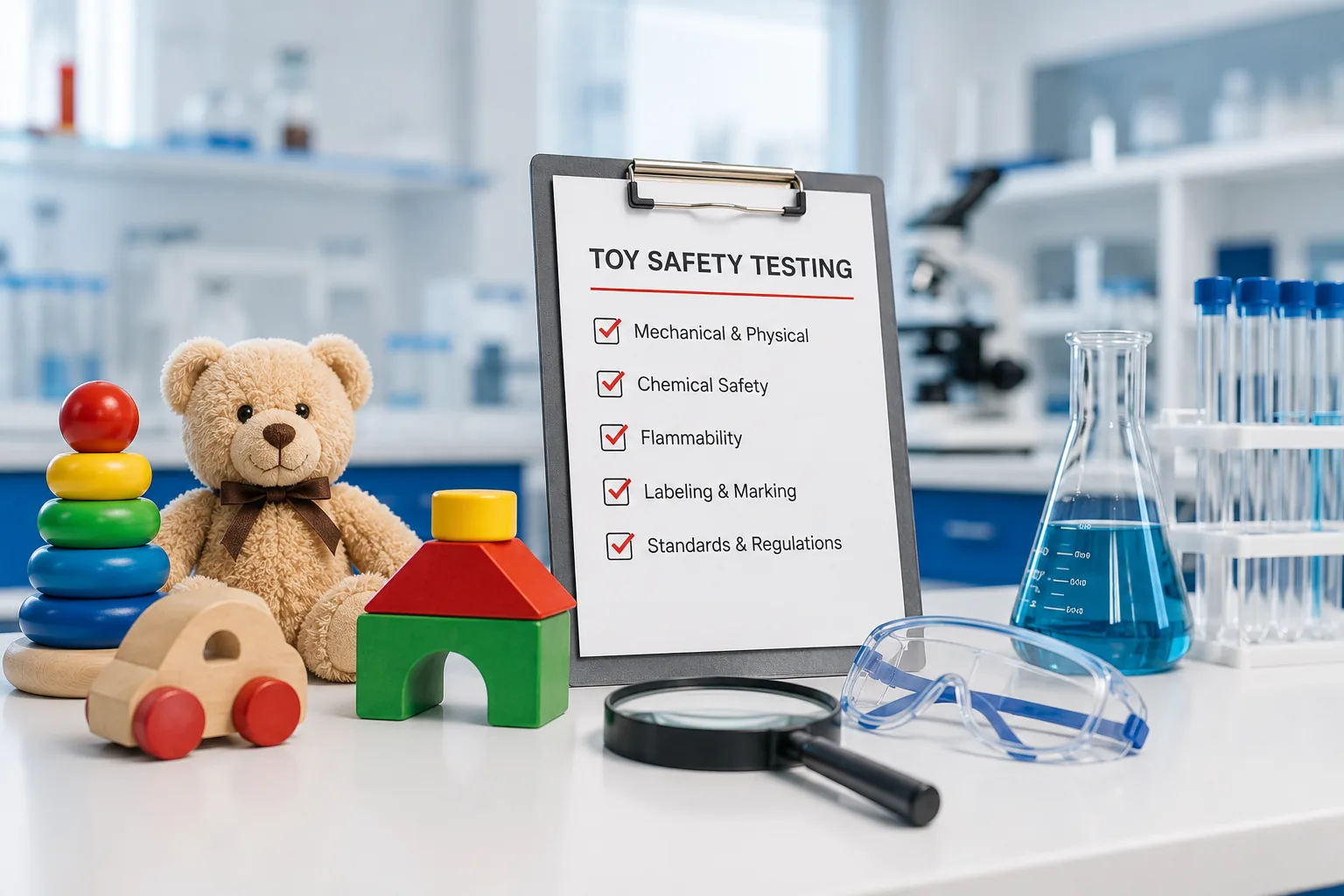
Lab Tests, Matched to Your Toy
The laboratory confirms the final test list after reviewing your product and target markets.
Small parts, sharp points, cords, hinges and breakage under normal use and abuse.
Lead, phthalates and other restricted substances in paints, plastics, textiles and coatings.
For plush, costumes and other product types where the market requires it.
Battery compartments, overheating and wiring on powered toys.
Warnings, age grading, instructions and tracking information for each market.
Inspectors Across 13 Chinese Provinces and 13 Asian Countries
Our inspectors are full-time engineers on our own payroll — not freelancers hired for the day. Each visit is GPS-verified at check-in, and our quotes include travel and weekend work. No add-ons later.
Toy Types We Inspect
Each type has its own weak points. Plush toys hide needles, ride-ons tip over, battery toys overheat — the checklist changes with the product.
Needle detection, seam strength, eye and nose pull tests.
Splinters, paint migration, small parts, moisture content.
Stability, structural strength, finger traps.
Battery compartments, overheating, sound levels.
Attached parts, cords, chemical migration in plastics.
The strictest grade — zero small parts, zero sharp edges.
Pick the Moment That Protects Your Order
Most buyers book one of these three checkpoints.
Around 30–50% of the order done. Problems are still cheap to fix, and the factory has time to correct them. During Production Inspection
100% of the toys finished, 80% packed. The standard final check most orders use. Final Random Inspection
Right toys, right cartons, right quantity — watched as the container is filled and sealed. Container Loading Supervision
The Rules Your Market Actually Applies
A starting point for planning — the current edition and full scope get confirmed before any testing begins.
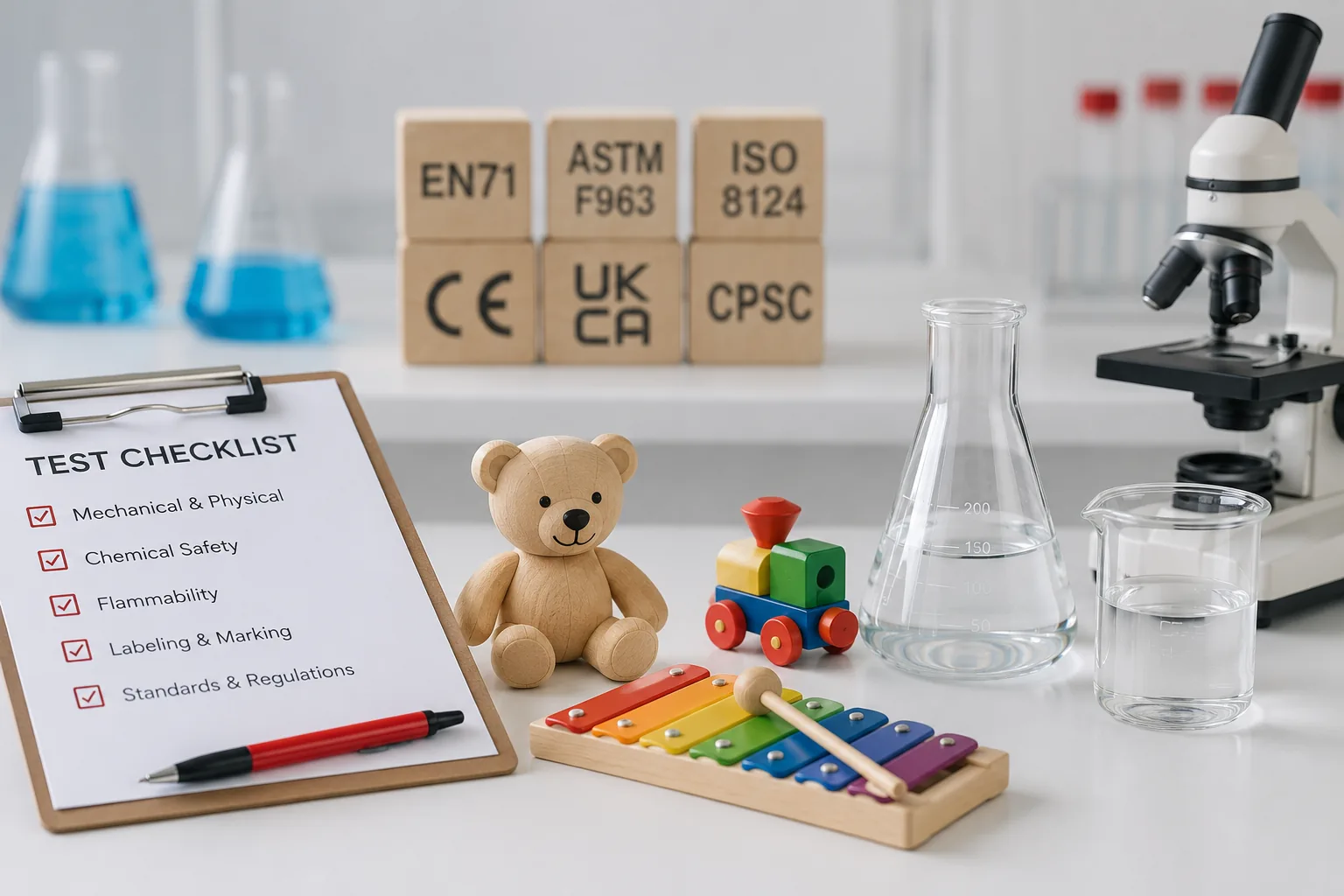
ASTM F963-23 is the mandatory toy standard for products made since 20 April 2024. ASTM F963 covers toys intended for children under 14 years of age. Toys designed or intended primarily for children 12 years of age or younger generally require third-party testing by a CPSC-accepted laboratory and a Children’s Product Certificate (CPC) issued by the manufacturer or importer. That certificate comes from you or your importer — not from us.
EN 71 standards under the Toy Safety Directive 2009/48/EC. A new Toy Safety Regulation (EU) 2025/2509 entered into force on 1 January 2026 and applies from August 2030.
Toys Regulations under the Canada Consumer Product Safety Act — mechanical, flammability and other toy hazards.
AS/NZS ISO 8124. The under-36-month standard was updated in 2023.
What to Send Us Before We Start
Testing the wrong colour, battery or label version leaves real variants outside the report. A few details up front prevent that.
Photos, model numbers, what it does, accessories in the box, and any way a child could reasonably misuse it.
The age range on the label, and whether a small child is likely to put it in their mouth.
Plastics, paints, textiles, metals, batteries — plus every colour version, since each one can change the test plan.
Each destination country in writing, plus any testing rules your retailer or platform adds on top.
How a Booking Runs
Nothing gets tested until the scope, markets and clauses are clear on both sides.
Product, age grade, materials, markets, factory location and your preferred date.
Standards, clauses, sample quantities, timing and the all-inclusive quote — in writing.
Models, variants, condition and documents recorded before anything is tested.
The inspector works through the checklist on site; the laboratory runs the approved test items.
Within 24 hours for inspections, with photos and clear pass, fail or hold results. We stay on the line for questions and retests.
Not Sure Which Tests Your Toy Needs?
Send us a product photo and the country you are selling into. We will tell you which standards apply and what the inspection should cover — before you spend anything.
Questions Buyers Ask Us
How much does a toy inspection cost?
We quote per man-day based on the factory location, order size and checklist scope. Travel and weekend work are already included in the quote, and the price is confirmed in writing before you commit.
How fast can an inspector reach the factory?
Within 48 hours across China’s major manufacturing provinces, once we have your product details, factory address and preferred inspection date.
Does UTS issue a Children’s Product Certificate, CE marking or product certification?
No. UTS provides inspection and testing coordination within the approved scope. The manufacturer, importer or other responsible economic operator remains responsible for the applicable declaration, certificate or market-placement obligation.
How many samples does toy testing need?
It depends on the product type, age grade, materials, colour variants, requested clauses and whether any destructive tests apply. We confirm the laboratory’s sample quantity with you before anything is shipped.
Can one test report cover every country and every variant?
Usually not. Market rules, standard editions, product functions, materials and age grades differ. Untested colours, components or variants are not covered unless the laboratory confirms they are represented in the approved test plan.
What happens when a sample fails a test?
The report shows which requirement failed and which sample was tested. You and your supplier review the affected material, component or design, fix it, and we confirm whether a targeted retest is enough or a new full test is needed.
An Accredited Inspection Body, Not a Freelance Network
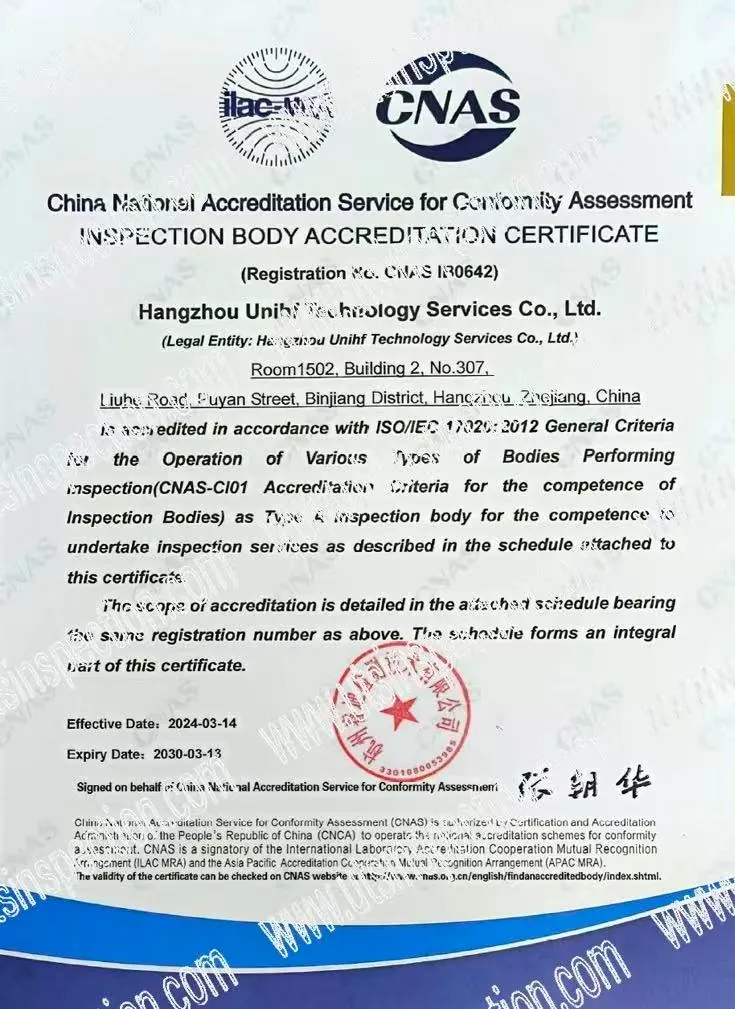
A Type A inspection body, also working to ISO 9001:2015 quality management.
Degree-holding inspectors on our payroll, with hands-on toy and children’s product experience.
GPS verification on arrival, and a zero-tolerance anti-bribery policy on every job.
We work for the buyer, not the factory — inspections, factory audits and lab testing coordination across China and Asia.


What a Test Report Covers — and What It Doesn’t
A report is evidence for the samples tested and the scope approved. It is not a blanket guarantee for every unit you will ever produce.
The report gives you
- The methods used, the samples tested, the clauses applied, the results and the lab’s observations.
- A clear basis to ask the factory for fixes, and to decide whether more testing is worth it.
The report does not
- Automatically cover untested colours or variants, future production changes, or every law in every market.
- Replace your legal role. UTS does not issue a Children’s Product Certificate, CE marking, notified-body approval or legal opinion.
More Ways to Protect a Toy Order
Testing checks selected samples in a lab. Inspection checks the real production goods at the factory. Most buyers use both.
The full lab testing coordination service, from scope review to report.
View service Sample EvaluationCheck the approved sample before bulk production starts.
View service Amazon FBA InspectionFNSKU barcodes, polybag warnings and carton requirements verified.
View service Children’s Product Safety GuideSmall parts, sharp edges and material hazards, explained for buyers.
Read the guide Plush Toy Inspection GuideNeedle detection, eye tensile strength and seam durability in detail.
Read the guide CE / RoHS / REACH TestingRestricted-substance compliance for the European market.
View serviceTell Us About Your Toy. We’ll Take It From There.
Send product photos, the target age, destination countries and your preferred date. You get a confirmed scope and a written quote back from the coordination team.
Rather talk first? Call +86 757-86783812