Tel
+852-61343425
On-site quality control for analog quartz and digital watches. Time accuracy, functions, strap strength and packaging are checked against your approved specification before the goods leave the factory.
CNAS-accredited to ISO/IEC 17020 · Full-time engineers · No travel or weekend surcharges
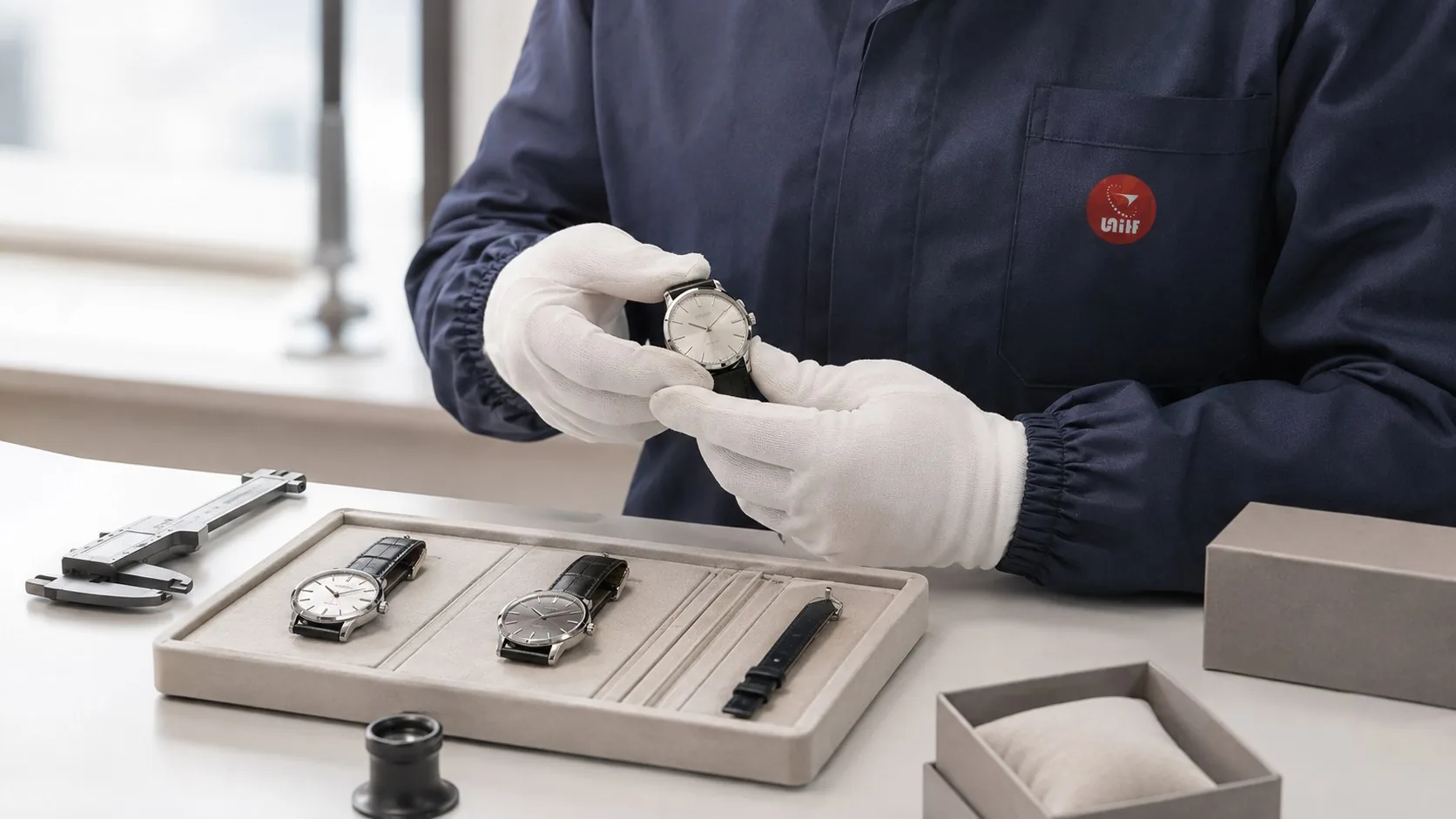
Importers and brands book UTS inspectors for shipment-stage quality control across China and Asia.








A watch can look fine in the box and still fail on your customer's wrist. These are the problems our inspectors are briefed to catch before your payment is released.
A four-hour running test exposes stopped or intermittent movements that a quick glance at a ticking watch never shows.
Hand alignment is checked at the 3, 6, 9 and 12 o'clock positions on every sampled piece, including clearance from dial, indexes and crystal.
Samples are synchronized with a reference clock and compared after the test period. The report records the seconds gained or lost, not a guess.
Pull and torsion tests with a force gauge expose weak spring bars, loose connecting pins and closures that pop open under load.
Every digit, icon and backlight is checked against the approved function list — missing segments, flicker and weak contrast included.
Scanned content must match your SKU, model and purchase order data. An unreadable barcode is recorded for correction and recheck.
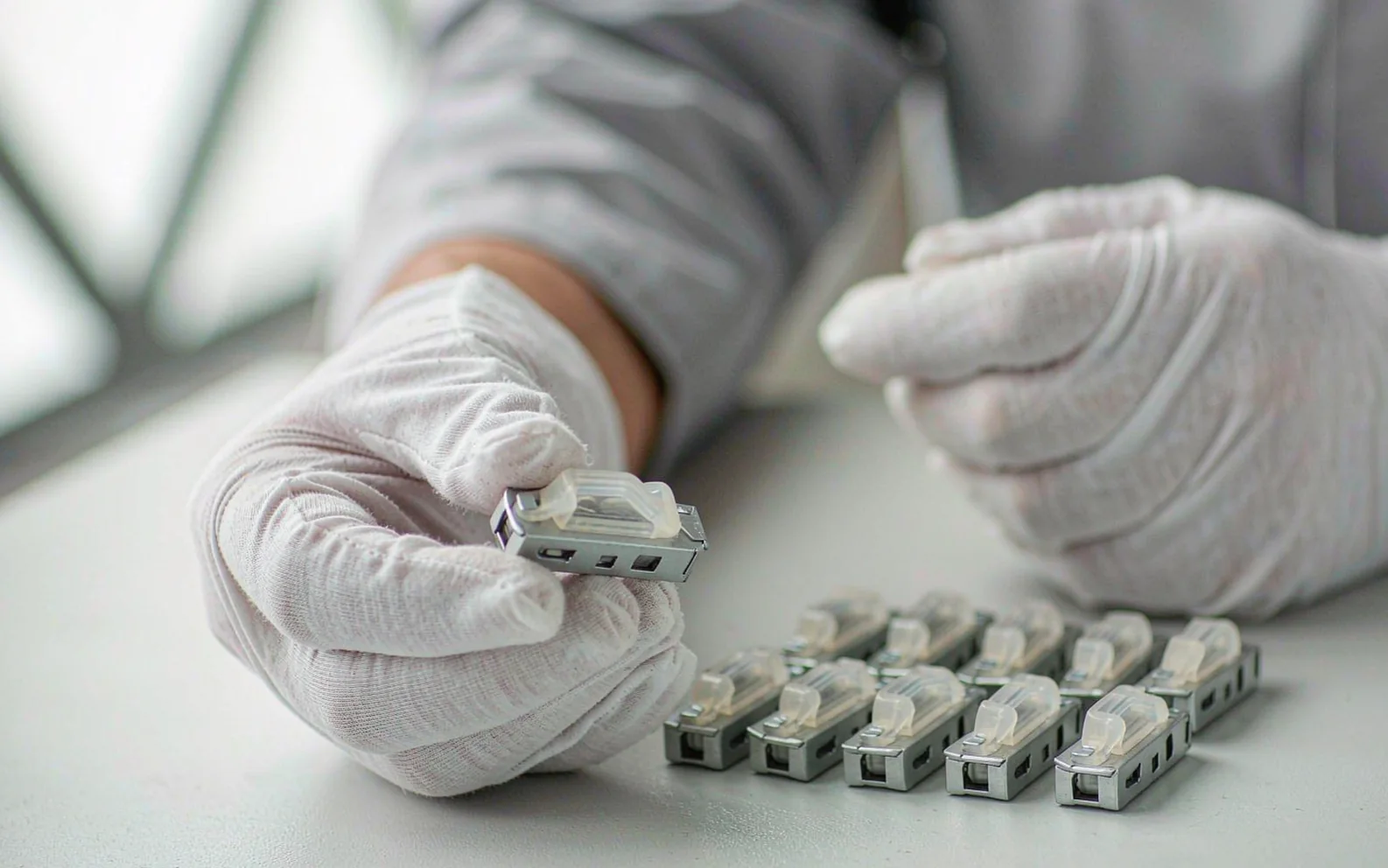
Not every scratch sinks a shipment, and not every ticking watch is a good one. Here is how findings are usually graded. Your own defect definitions always come first when you have them.
Every watch inspection follows a written working instruction. Your purchase order, specification, approved sample and buyer requirements decide the exact test scope.
Time setting, running and accuracy, hand and display alignment — plus alarm, calendar, stopwatch and backlight where the approved model has them.
Material-matched strap checks, buckle action, pull and torsion tests, and a full review of case, crystal and back cover against the approved sample.
Battery type, voltage and working current recorded as real readings. Water-resistance testing when your approved specification calls for it.
Case and strap measurements, marking consistency across watch and box, barcode scans, inner packing review and a shipping-carton drop test.
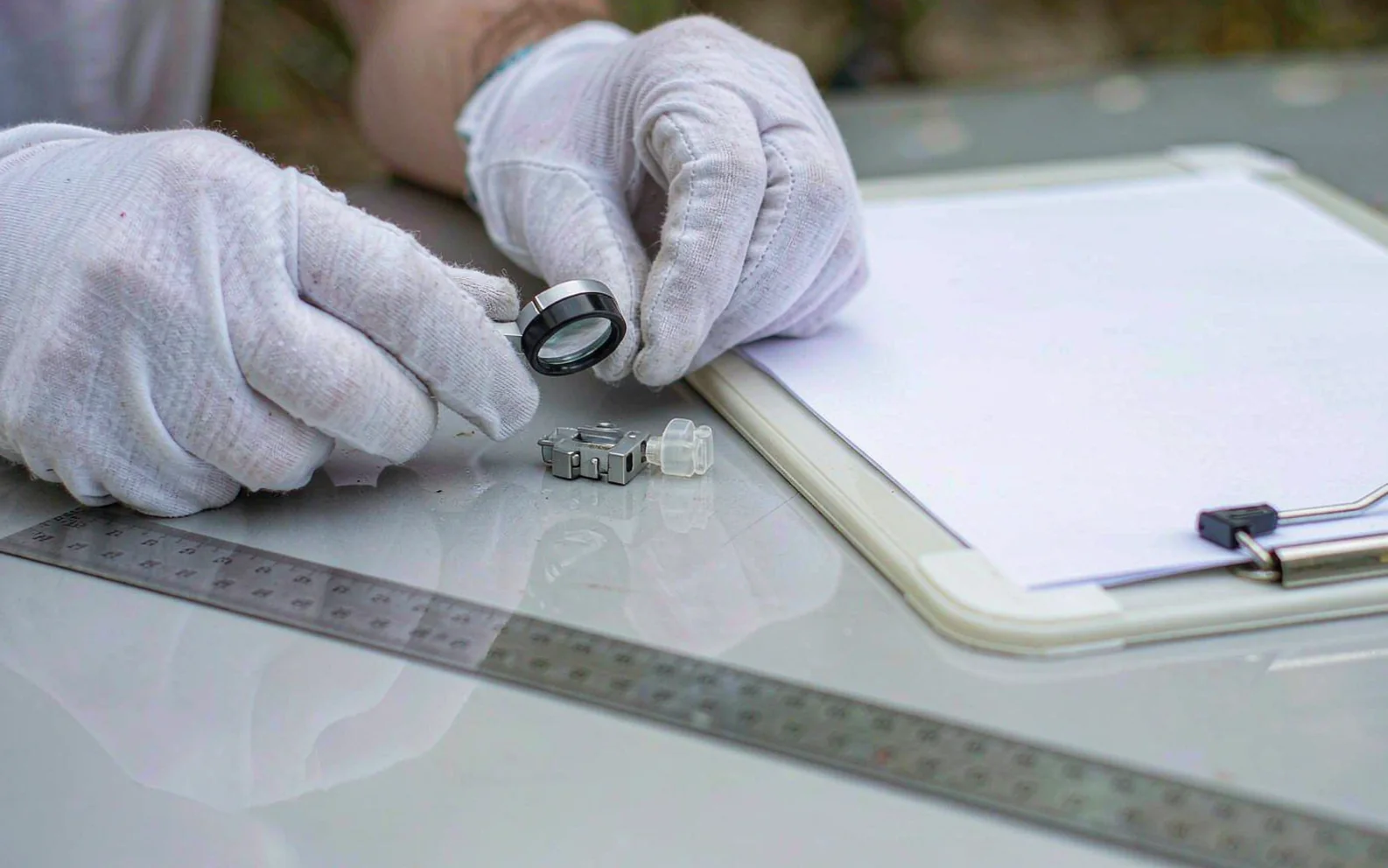
We check what your model really has — nothing assumed, nothing skipped. The approved product documents set the list.

Send the purchase order, product specification and approved sample today. The inspection checklist is confirmed with you before anyone enters the factory.
Send Your Watch Spec
Timekeeping is tested in separate steps — setting, running, accuracy and hand alignment — because one combined "time test" can hide different failures.
These are UTS working-instruction references. When your approved movement or product specification states a different limit, your document wins — and the report shows the measured result, not just pass or fail.
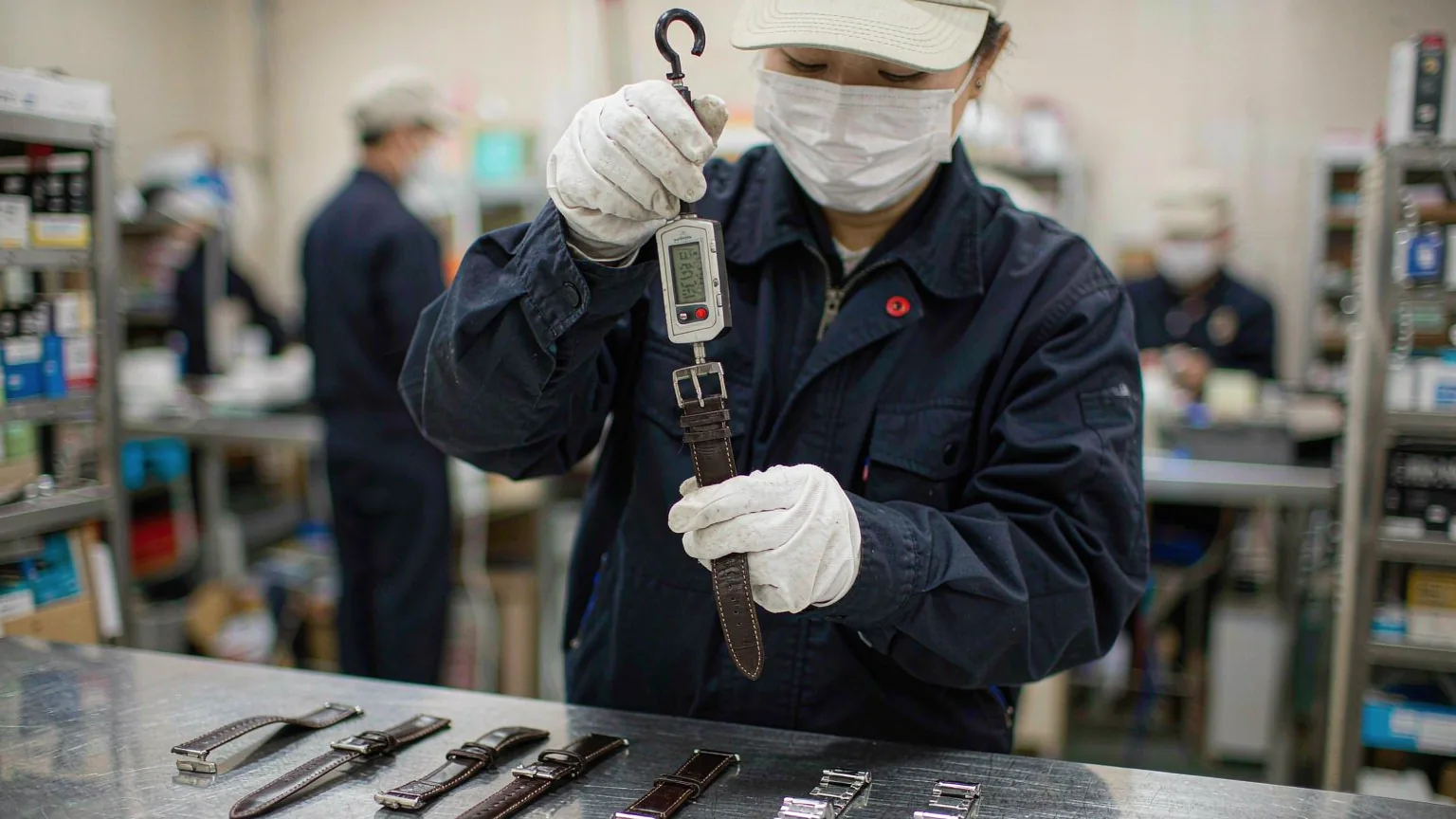
A clean case finish does not compensate for a weak spring bar or a buckle that opens by itself. Each strap material gets its own defect review, then the connection is tested with a force gauge under Special Level S-2.
After the pull and torsion tests, the strap must show no breakage, no permanent stretch and no loss of adjustment or locking. The bare watch then takes four 1-meter drops onto a wood surface in different directions — no breakage, and it must keep running.
This is the part your customer touches first. Every sampled watch is compared with the approved sample, and one piece per inspection can be opened for a look inside.
Scratches, dents, peeling plating, uneven gaps, loose screws, sharp edges, bent lugs, wrong or badly placed logos — checked against the approved sample, not against memory.
Cracks, chips, scratches, dust or fibers trapped underneath, visible distortion. Where a protective film hides the surface, selected pieces get a closer look so nothing hides below it.
It must sit flat with no abnormal gap, screws complete and seated. Model, material, battery and water-resistance markings are compared with your product documents.
When opening is in scope, we review the visible movement, battery, spacers, insulation and internal cleanliness on one sample — then reassemble it and check it still runs.
A watch can pass a quick function test while its voltage or working current sits outside the approved requirement. Where measurement is in scope, the actual readings go into the report.
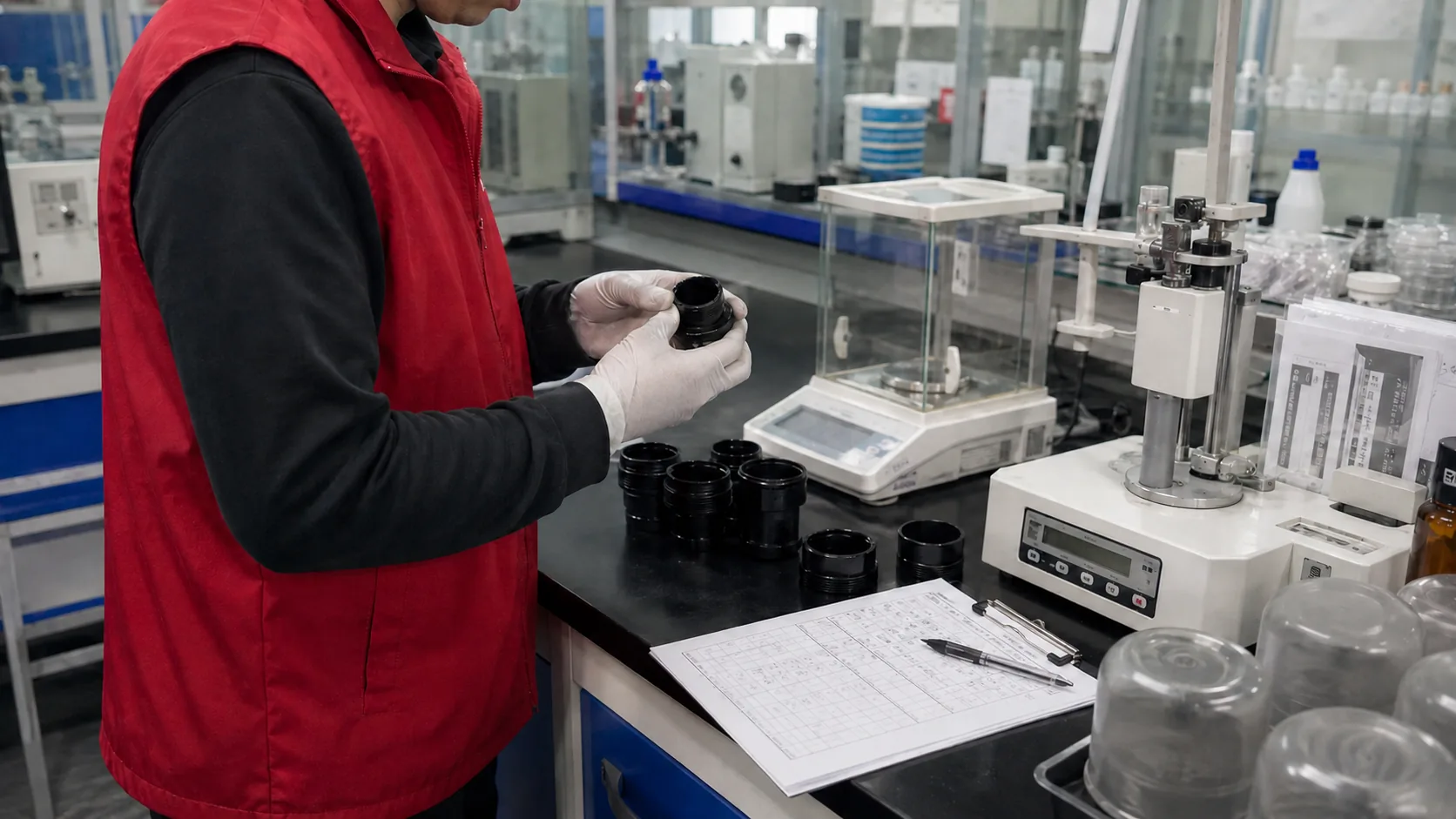
Battery type, voltage, working current, polarity, seating and contact condition are measured under Special Level S-2 and compared with your battery or movement specification.
The claim on dial, case back, tags, box and manual is first checked for consistency, then performance is tested with suitable equipment inside the approved test range.
Samples are reviewed again for continued operation, fogging under the crystal, moisture entry and any loosening of housing parts.
An on-site inspection does not certify a watch to ISO 22810. Where formal verification is required, a laboratory test program is arranged separately.
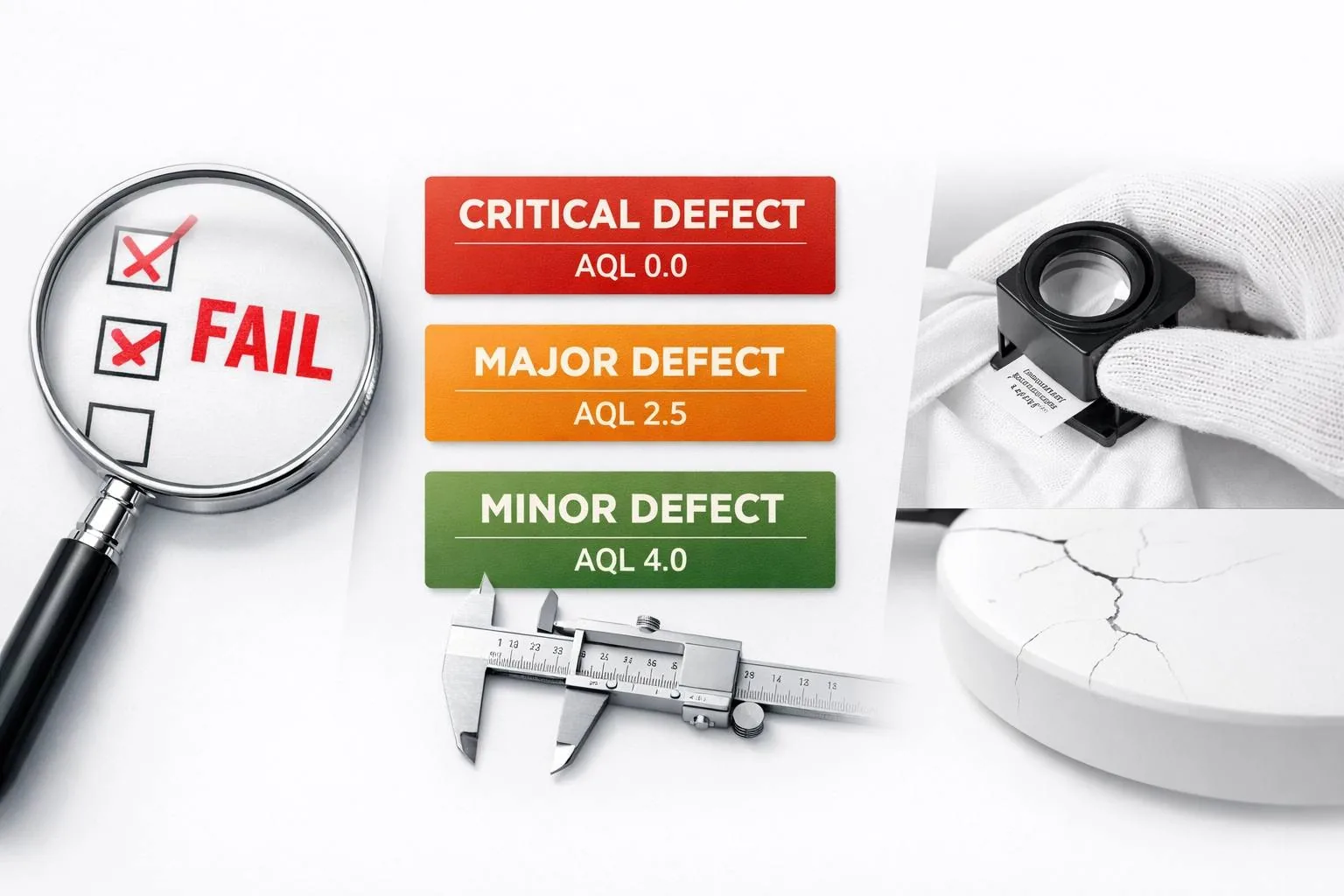
Unless you specify another plan, the watch working instruction samples to ANSI/ASQ Z1.4 (ISO 2859-1) at General Inspection Level II.
AQL is not a defect percentage you agree to accept. Sample size and acceptance numbers are read from the ANSI sampling tables against your actual lot size.
A man-day of inspection costs less than one return wave, one chargeback dispute or one delisted SKU. Book the check before the cartons close.
Request an InspectionWatch packaging has its own failure modes: a buckle rubbing the crystal, a crown under pressure, a strap folded tight enough to crack. The inner packing is reviewed piece by piece, then the shipping carton is dropped — one corner, three edges, six faces.
Drop height 76 cm (30 in). Contents are reviewed before the test, repacked the same way, then opened again for damage.
Drop height 61 cm (24 in). After the drop, the gift box must still be suitable for sale and the watch must not have moved inside.
Drop height 46 cm (18 in). Crystal, case, crown, strap, buckle and basic functions are all re-checked after impact.
Correct model, color and strap together; manuals and warranty cards present; product held firmly in its tray; carton marks and quantities correct.

Better documents mean a sharper checklist. Send what you have — our office team reviews everything before the inspection date is fixed.
No approved sample yet? A sample evaluation before bulk production gives you that reference point.
You deal with one coordination desk from the first email to the final PDF.
Purchase order, product specification, approved sample and factory address — that is all we need to quote.
Your requirements, defect definitions and special tests are fixed in writing before the inspection day.
A full-time UTS engineer draws random samples at the factory and signs in by GPS at the gate.
A clear pass, fail or hold result with measured readings and defect photos, reviewed before release.

"The watch gained 0.5 seconds" tells you something. "Time test passed" does not. Every finding in your report is tied to the actual sampled piece and the test scope.
Most watch orders need one Final Random Inspection before shipment. New suppliers and new models earn an earlier look.
A sample evaluation compares workmanship, dimensions, functions and packaging against your approved requirements while changes are still cheap.
An Initial Production Inspection for new models and new suppliers, or when early production risk needs a documented answer.
A During Production Inspection catches a drifting process while most of the order is still fixable.
The Final Random Inspection — the standard shipment-stage check and the last chance to stop a bad lot before it ships.
Watch factories sit mostly in Guangdong and Fujian — our inspectors are already there. The same 48-hour promise covers 13 Chinese provinces and 13 Asian countries, with no travel fee and no weekend surcharge added to your quote.

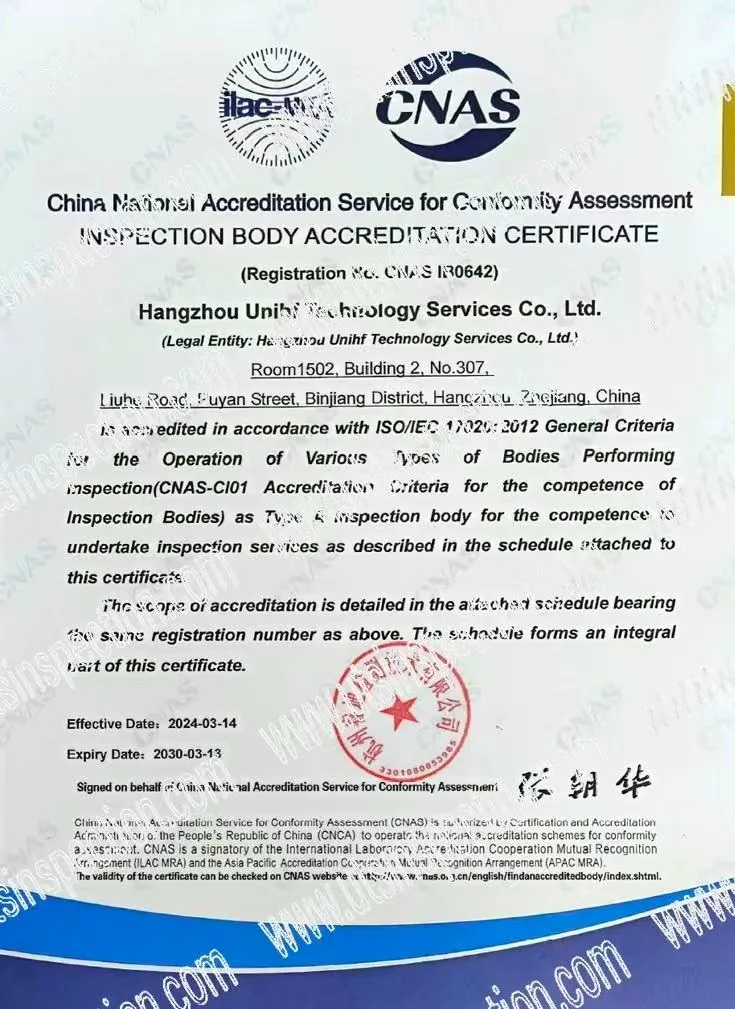
UTS is accredited by CNAS against ISO/IEC 17020 as an inspection body and certified to ISO 9001:2015. Inspections have run continuously since 2006, carried out by full-time engineers — not freelancers hired per job.
A third-party inspection documents what the agreed sample shows. It does not promise a zero-defect shipment, and it does not replace your supplier's responsibility for quality — that honesty is what keeps the report useful.
Most watch importers we work with buy other lines too. One coordination desk can book these inspections at the same factory visit or on a separate date.
Lens condition, frame alignment and hinge function against your approved sample and spec.
Read the eyewear guide
Stitching, zippers, handle strength and packing — the same shipment-stage discipline.
Read the bag guide
Sound output, microphone function and cable checks for your audio accessories.
Read the earphone guide
EN 71 and ASTM F963 aligned checks, small parts and mechanical safety tests.
See the toy serviceThe same working methods our inspectors use, written for buyers.

Tell us the model, quantity, factory location and your target date. You get a written man-day quote before you commit to anything.
Get a Written QuoteWe charge per man-day — one inspector for one working day. The quote depends on factory location, order size and test scope. Travel and weekend work are already included, and you receive the full quote in writing before you commit.
The standard checklist covers analog quartz watches and digital watches. Mechanical watches, smartwatches, GPS models and watches with wireless or sensor functions may need additional model-specific tests — tell us the model and we confirm the scope before booking.
Our working instruction references ±1 second per day for quartz watches and ±3 seconds per day for LCD models. If your approved movement or product specification states a different limit, that document takes priority. Either way, the report shows the measured seconds gained or lost for each sample.
Yes, when the test is in the approved scope — pressure, duration and sample quantity follow your product specification or instruction manual. An on-site check records performance under the agreed method; it does not certify the watch to ISO 22810. Formal laboratory verification can be arranged separately.
You receive a fail or hold result with photos of every defect and the classified defect list. You decide what happens next — rework, sorting, a targeted re-inspection after correction, or negotiation with the factory. The release decision is always yours.
Our inspector draws samples randomly from different cartons, positions, colors and models according to the sampling plan. Pieces pre-selected by the factory are not accepted as random shipment samples.
Each model, color and strap combination gets its own sample drawn from its own cartons, so one strong SKU cannot hide a weak one. The report breaks findings down per SKU. For big mixed orders, read our multi-SKU inspection guide or just send the packing list — we will propose the sampling split.
An inspector can reach factories across China and 13 Asian countries within 48 hours of booking. The verbal result comes the same day, and the full PDF report with measured readings and defect photos follows within 24 hours.
Send the model, order quantity, factory location and your preferred date. The coordination desk replies with a confirmed checklist and a written quote.