FRI means Final Random Inspection: a check of randomly selected finished goods before shipment against buyer-approved requirements. At UTS, FRI is also called Pre-Shipment Inspection (PSI) and takes place when production is 100% complete and at least 80% of the products are packed.[1]
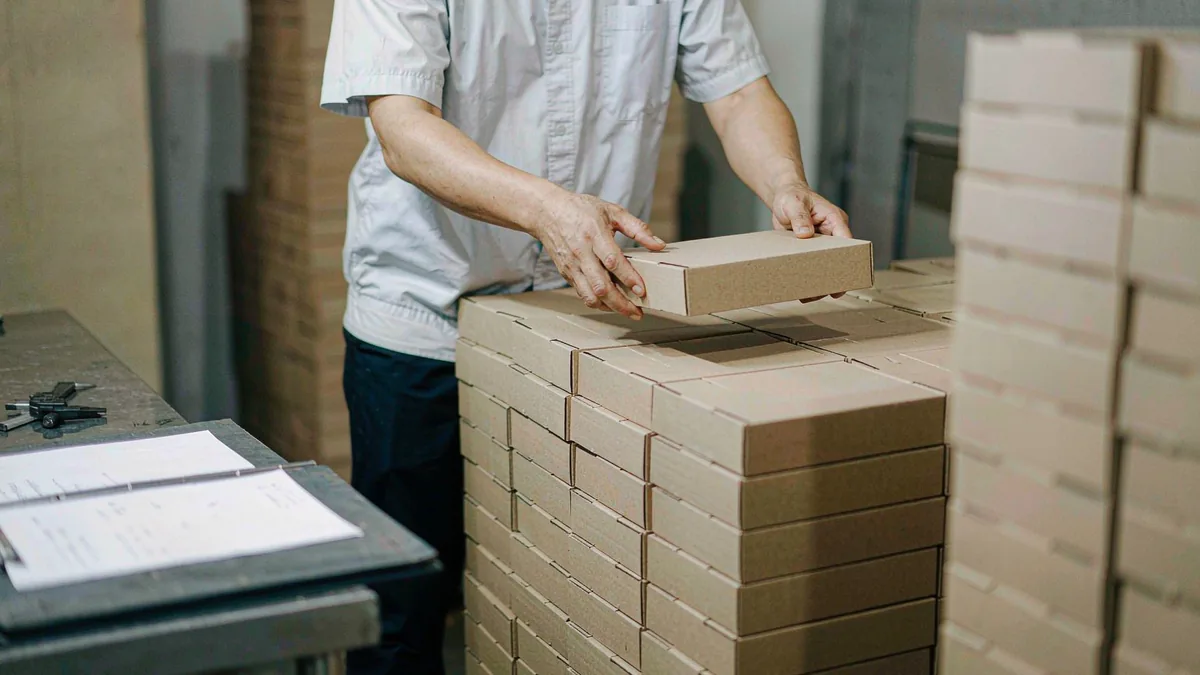
FRI checks a random sample from the finished lot, not a unit the factory picked out.
We use FRI to document the condition of the presented lot, including sampled workmanship, measurements, function, labels, and packaging. Our reports contain actual findings, not recommendations, corrective-action plans, or shipment-release advice. The preparation guidance below is general information for buyers and suppliers, not report content.
FRI in Numbers
These figures describe our inspection stages and commonly used criteria; they are not universal requirements for every product or provider.
- 100% produced and at least 80% packed: our readiness threshold for FRI.[1]
- About 5–10% produced: the timing for our Initial Production Inspection (IPI).[2]
- About 30–50% finished and packed into export cartons: the timing for our During Production Inspection (DPI), also called DUPRO.[3]
- Critical 0 / Major 2.5 / Minor 4.0: commonly stated criteria on our FRI service page, subject to buyer-approved requirements. Critical 0 means no critical defects are accepted in the inspected sample; it is not proof of zero defects throughout the lot.[1]
For a hypothetical 1,000-unit order, the FRI readiness threshold means all 1,000 units are finished and at least 800 are packed. It does not mean that 800 units will be inspected. The inspection sample size is determined separately.
What Each Letter Means
Final
The inspection concerns finished goods presented before shipment, rather than early output or work still on the production line. It does not assess the factory's overall capability or cover later shipments.
Random
Our team selects samples from the presented lot instead of relying on samples prepared in advance. Random selection is central to acceptance sampling: information from a sample supports a decision about the lot under an agreed plan.[4] Missing SKUs or inaccessible cartons restrict the coverage and must not be treated as inspected goods.
Inspection
We compare the selected goods with approved specifications, samples, and inspection criteria. ISO describes inspection as examining items and determining conformity with requirements; ISO/IEC 17020 sets requirements for inspection bodies.[5] Citing that standard here explains the activity, not a product certification.
When Is a Lot Ready for FRI?
Our FRI readiness threshold is 100% production complete and at least 80% packed.[1] If, for example, all goods are finished but only 60% are packed, the lot does not meet that threshold. This hypothetical example concerns readiness, not a mathematical rule that every sample below 80% packing is unrepresentative.
The percentage alone is not enough to define the available goods. For a mixed order, confirm the following before the visit:
- Finished and packed quantities by model, color, size, and destination version
- The inspection location and any goods stored elsewhere
- The agreed inspection lot and sample allocation across SKUs
- Access to cartons for random selection and opening
- Approved references, test instructions, and equipment needed for the agreed checks
Our multi-SKU inspection guide explains why one purchase order does not automatically define one inspection lot. It also distinguishes reported production quantities from packed and physically available quantities.
What Does FRI Check?
The buyer-approved scope determines the actual checks. Our FRI service describes checks against the purchase order, appearance references, measurements, markings, functionality, and agreed safety requirements.[1] Typical inspection materials include:
| Check area | What is compared | Reference |
|---|---|---|
| Quantity and assortment | Available quantities, SKU identity, carton counts, and packing ratios | Purchase order and packing list |
| Appearance and workmanship | Color, finish, assembly, and visible defects | Approved sample and defect definitions |
| Measurements | Specified dimensions and tolerances | Drawings, size charts, and specification sheets |
| Function and agreed safety checks | Applicable on-site checks under defined conditions | Approved methods and acceptance limits |
| Labels and markings | Model, ratings, warnings, instructions, and placement | Approved artwork and labeling files |
| Packaging and codes | Retail packaging, export cartons, shipping marks, and code data | Packaging specifications and approved barcode or QR-code data |
Where barcode or QR-code scanning is included, we require a 100% scanning-success rate for the inspected codes: every checked code must scan successfully and match the approved data using the agreed device and test conditions. The record should identify the checked SKU, quantity, device, conditions, and result. This does not mean every code in the shipment was scanned or guarantee readability on all later devices.
A successful scan is not the same as a formal print-quality grade. ISO/IEC 15416:2025 addresses linear-symbol print-quality testing; it must not be treated as a general QR-code verification standard.[6] Any formal grading requirement needs its own agreed method and suitable equipment.
How Do Random Sampling and AQL Work?
Our FRI service describes AQL sampling based on ANSI/ASQ Z1.4 (ISO 2859-1).[1] AQL stands for acceptance quality limit. ISO 2859-1:2026 is the current edition of the AQL-indexed lot-by-lot sampling standard; the edition and plan applicable to an order should be specified rather than assumed.[7]
AQL values alone do not determine the sample size. The lot size, inspection level, sampling plan, and applicable acceptance and rejection numbers also matter. Our ANSI sampling tables explain how those inputs are used. Do not interpret AQL 2.5 as permission for exactly 2.5% of the shipment to be defective.
| Category | Common UTS criterion[1] | Meaning |
|---|---|---|
| Critical | 0 accepted in the sample | No critical finding is accepted under this criterion; unchecked units remain unchecked. |
| Major | AQL 2.5 | The observed count is compared with the applicable plan's acceptance and rejection numbers. |
| Minor | AQL 4.0 | A separate category with its own agreed definitions and decision limits. |
Defect severity and the numerical acceptance limit are different questions. Our defect classification guide distinguishes defects by their effect; the sampling plan determines how observed counts are evaluated. A defect does not become minor simply because its count is low.
Acceptance sampling supports a lot decision, not an exact estimate of lot quality.[4] Passing the sample does not prove that every uninspected unit is defect-free. Where all units need examination, our full inspection service is a different scope; even then, the specified characteristics and methods still define what was checked.
FRI also does not replace laboratory testing. Material composition, restricted substances, or performance requiring controlled equipment may need separate laboratory coordination. ISO/IEC 17025 sets competence requirements for testing and calibration laboratories.[8] Our product testing versus product inspection guide explains the distinction.
What Does an FRI Report Tell You?
Our report records the actual inspection scope and findings. It can include the observed result against agreed criteria, but it does not decide whether you should ship the goods.
Recorded Findings
- The presented lot, packing status, selected SKUs, and quantities inspected
- The requirements applied, measurements, observed defects, and test outcomes
- Packaging and labeling findings with relevant photos and references
- Unavailable goods, tests not completed, and other coverage limitations
Decisions Outside the Report
Corrective-action plans, improvement recommendations, and shipment-release advice are not contents of our reports. You or your authorized decision-maker determine the next action. A sampled inspection result alone does not establish destination-market legal compliance, replace required testing or certification, or prove the condition of unchecked goods.
How Is FRI Different From IPI, DPI, and Loading Supervision?
| Stage | UTS timing | Main question |
|---|---|---|
| Initial Production Inspection | About 5–10% produced | Does early output match approved requirements?[2] |
| During Production Inspection | About 30–50% finished and packed into export cartons | What does in-process output show while production continues?[3] |
| Final Random Inspection | 100% produced and at least 80% packed | What does the finished lot show against the agreed criteria?[1] |
Earlier inspections provide evidence about earlier production stages; FRI provides finished-lot evidence. Neither substitutes for the other. Container loading supervision addresses the loading operation, a separate scope from inspecting finished products.
What Should You Prepare?
Provide one buyer-approved set of documents with revision identifiers and approval dates:
- Purchase order, SKU list, quantities, and packing list
- Specifications, drawings, tolerances, and approved sample identity
- Defect classifications, sampling plan, and acceptance criteria
- On-site test methods, equipment requirements, and limits
- Packaging artwork, label files, code data, and shipping marks
- Previous findings that need a defined follow-up check
Where approved files conflict, confirm the controlling revision with our team before the inspection. A quantity difference by SKU should remain visible rather than being hidden by an equal overall total. Our sample evaluation service is a separate option for assessing a sample before bulk production; it does not establish that the later lot matches it.
How UTS Documents the Inspection
Our published multi-SKU workflow provides concrete examples of how we organize inspection evidence. Before arranging a visit, our office team reviews the purchase order, SKU list, approved specifications and samples, packaging artwork, code data, and buyer instructions. When those documents leave the lot structure unclear, our project service team follows up with the client before the schedule is confirmed.
The same workflow separates workmanship sampling from product-specific test quantities. A recorded test identifies the tested SKU, quantity, approved requirement, method, and observed result. A function check on one model is not automatically evidence for a different model with different components or ratings. Our guide also distinguishes carton counting and sampled inner-carton checks from a piece-by-piece count of the shipment.
These documented practices explain what useful FRI evidence looks like: identifiable goods, defined checks, actual results, and explicit limits. They do not imply that every order uses the same tests or that every SKU receives a separate lot result. Our multi-SKU inspection workflow details those distinctions. For questions about a site's capability rather than a finished lot, a factory evaluation is a different assessment.
FRI in Short
FRI is a sampled inspection of finished goods before shipment, not a factory certification or a promise that every unit is defect-free. At UTS, its readiness threshold is 100% produced and at least 80% packed.[1] The approved scope and sampling plan determine the checks; our report records what was actually found, while the shipment decision remains yours.
Planning an FRI? Share your lot details, approved requirements, and inspection scope with our team.
Contact UTSReferences
- UTS Final Random Inspection — terminology, readiness threshold, scope, and commonly stated criteria.
- UTS Initial Production Inspection — early-production timing.
- UTS During Production Inspection — mid-production timing.
- NIST/SEMATECH: What Is Acceptance Sampling? — random selection and the purpose of acceptance sampling.
- ISO/IEC 17020:2026 — inspection definition and requirements for inspection bodies.
- ISO/IEC 15416:2025 — print-quality testing for linear bar code symbols.
- ISO 2859-1:2026 — AQL-indexed sampling schemes for lot-by-lot inspection.
- ISO/IEC 17025:2017 — competence requirements for testing and calibration laboratories.