Goods are ready for final random inspection when the agreed shipment lot is 100% produced and at least 80% packed in export cartons. Every SKU must be complete, the lot must be identifiable and accessible for random sampling, and the agreed specifications and test arrangements must be available. These are UTS's published FRI starting conditions, not proof that the goods have passed inspection. [1]
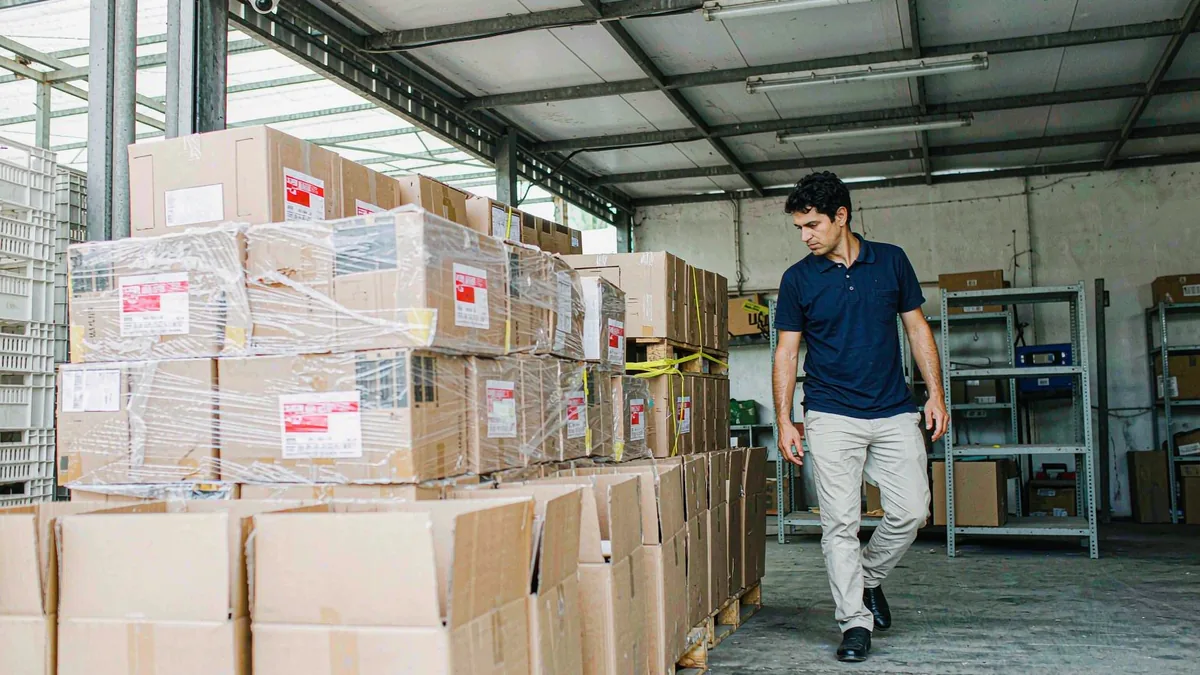
Inspection starts once the whole lot is produced and most of it is already packed.
We are UTS, a third-party inspection company. Our work includes product inspection, factory audit, supplier evaluation, and laboratory testing coordination. You can arrange a visit in advance, but the goods need to meet the readiness conditions when the inspection starts.
The Readiness Rule
Our final random inspection checks randomly selected samples against agreed requirements before shipment. The scope can include quantity, appearance, dimensions, packing, labels, function, and applicable safety checks. [1] Random sampling must relate to a defined lot; its results do not establish that every unit is defect-free. [2]
| Starting condition | What to confirm |
|---|---|
| 100% produced | Every SKU in the agreed lot has reached its required finished quantity. Units awaiting components or unfinished rework are not complete. |
| At least 80% packed | Count packed units inside the agreed export cartons, not empty cartons or loose units beside them. Reconcile the packed quantities by SKU with the lot total. |
| Ready to inspect | The whole defined lot is identifiable and available for selection, and the documents, equipment, and conditions needed for the agreed checks are ready. |
The production stage determines which visit fits. These are the planning windows published on our service pages, not universal thresholds for every inspection arrangement.
| Inspection stage | UTS planning window | Question it addresses |
|---|---|---|
| Initial production inspection | 5%–10% produced. [3] | Does early output match the requirements? |
| During production inspection | 30%–50% finished and packed. [4] | What does current output show while production continues? |
| Final random inspection | 100% produced and at least 80% packed. [1] | What do the agreed checks find in the defined finished lot before loading? |
Readiness Checks Before the Visit
Complete Production by SKU
Check production completion by SKU, not just by order total. Each model, color, size, voltage version, and destination pack included in the lot must reach its required quantity.
In a hypothetical three-SKU order, two SKUs are finished while the third is still on the line. That full lot is not ready for FRI. Samples from the two finished SKUs cannot represent units that do not yet exist in their finished condition.
Packed Quantities That Reconcile
The 80% packaging threshold applies to the agreed lot total. A buyer's inspection plan may require more; confirm that requirement before the visit. A shipment-wide percentage should not hide an SKU whose finished goods or packaging cannot be examined.
| Hypothetical lot quantity | 80% packed |
|---|---|
| 1,000 units | 800 units |
| 5,000 units | 4,000 units |
| 10,000 units | 8,000 units |
These figures are arithmetic examples, not inspection sample sizes. Reconcile carton quantities using the units per carton, including partial cartons. Keep unpacked finished goods identifiable and accessible rather than excluding them from the lot.
The 80% starting threshold does not mean all cartons must already be sealed. If packing continues, keep the lot identity and selection access unchanged. Our findings describe the packing condition actually checked; they do not establish the condition of packaging completed after the visit.
Traceable Identity and Quantity
A current packing list should link each SKU to its carton numbers and locations, with separate ordered, finished, and packed quantities. Record replacements and rework movements so the units inspected can be traced to the shipment.
For illustration, six models in four colors create 24 combinations before size or market version is added. Define the SKU using the model, buyer item number, color, size, plug or voltage version, language version, and accessory set as applicable. A correct overall quantity can still conceal the wrong SKU mix.
Agreed Requirements and References
Make the current approved requirement set available to our team:
- Purchase order with SKU quantities and destination versions
- Specifications, drawings, or size charts with revisions, tolerances, and measurement methods
- Approved reference sample with approval identity, plus any agreed appearance limit samples
- Defect classifications, sampling plan, and acceptance criteria
- Packing and labeling files, including carton markings and retail-box requirements
Our published FRI service lists zero tolerance for critical defects, AQL 2.5 for major defects, and AQL 4.0 for minor defects, with sampling based on ANSI/ASQ Z1.4 (ISO 2859-1). [1] Specify the critical-defect acceptance rule and the applicable sampling-plan edition in the agreed checklist; the site's “AQL 0” shorthand is not a substitute for a complete sampling plan. AQL values are neither production-completion percentages nor proof that every unit meets requirements.
If specifications conflict or the approved reference is missing, our team cannot resolve the buyer's and supplier's requirements by assumption. Resolve the reference set before the affected checks; any unresolved limitation is recorded as a finding.
Labels and Test Arrangements
If barcode or QR-code checks are included, have the final labels and expected encoded data ready. For each inspected barcode or QR code, including FNSKU, UPC, or EAN where applicable, the scanning success requirement is 100%, and the decoded content must match the agreed identifier. Specify the scanner or reader, settings, lighting, and test conditions in the checklist. This requirement covers the inspected symbols only, not a scan of the entire lot or a promise of readability on all later devices.
Agree separately whether barcode print-quality grading is in scope, rather than leaving it implicit in a scan check. On-site function and dimension checks also need suitable power, equipment, and measuring tools. Where a carton drop test is agreed, prepare suitable test samples. Our report records a check that could not be performed as not performed, never as a pass.
Accessible Goods and Random Selection
Cartons must be reachable in their listed locations, with suitable lighting and handling support. Our team selects cartons and units under the agreed random-sampling method; a factory-prepared display or sample set cannot replace that selection. Random selection is central to acceptance sampling. [2]
Blocked goods, unrecorded storage locations, or uncontrolled replacements prevent reliable linkage between the checked items and the lot. Resolve those access and identity problems before the visit starts.
When to Move the Inspection Date
- Production remains unfinished for any SKU in the agreed lot.
- Packed quantities fall below the agreed threshold, or required packaging is unavailable for examination.
- Rework is incomplete, or suspect, reworked, and unchanged goods cannot be distinguished.
- The approved specification, sample, or packing file is missing or disputed.
- Essential tests cannot run because samples, power, equipment, or documents are unavailable.
Postpone FRI until the relevant conditions are met. If production is still in the 30%–50% window and an in-process assessment serves your purpose, discuss a DPI visit with our team instead. DPI is a different inspection stage, not a substitute for a final inspection of a completed lot. [4]
How Our Published FRI Workflow Helps You Prepare
Our published workflow starts with the PO details, product specifications, and factory address. Our team then finalizes the checklist with the product requirements, AQL levels, and special testing needs. On site, the work includes random sampling, physical tests, and visual inspection. The published report turnaround is within 24 hours, with defect photos, measurement data, and recorded inspection results. [1]
For readiness planning, that means the document set and test arrangements need to match the goods available on the visit date. A completed packing percentage alone cannot make a missing specification or an unavailable function test inspectable.
Our reports present actual findings within the agreed scope: what was checked, measurements and observations, defects found, and checks not completed. They do not contain corrective-action, improvement, or shipment-release recommendations. Decisions about sorting, rework, re-inspection, and shipment remain with the buyer and supplier.
Confirming the Visit Date
- Obtain a dated factory update showing finished, packed, and in-process quantities by SKU.
- Confirm full production for every SKU and at least 80% packed for the defined lot, or the higher agreed packaging threshold.
- Send our team the approved requirements, packing list, and agreed test arrangements.
- Confirm access to the lot without factory pre-selection, and record any rework or replacement movements.
- Update our team if readiness changes. Units added or replaced after sampling are not automatically covered by the earlier findings.
Choose the inspection date from the lot's verified readiness, not the planned shipping date alone. Being ready for FRI means the goods can be inspected; it does not mean they have passed.
Sources
- UTS Final Random Inspection — starting conditions, scope, published workflow, and defect criteria.
- NIST Engineering Statistics Handbook: What Is Acceptance Sampling? — random selection from a lot and the limits of acceptance sampling.
- UTS Initial Production Inspection — early-production timing.
- UTS During Product Inspection — in-process timing.
Planning a final random inspection? Share the SKU quantities, packing status, specifications, and proposed visit date with our team.
Contact UTS about your inspection