To verify an inspection company's independence, check who owns and controls it, whether its other work overlaps with the goods being inspected, and who controls sampling and report findings. Verify any accreditation claim directly with the accreditation body, then compare those answers with a redacted sample report. A logo, a certificate image, or a findings-only report is not enough on its own. If material questions remain unanswered, treat independence as unverified.
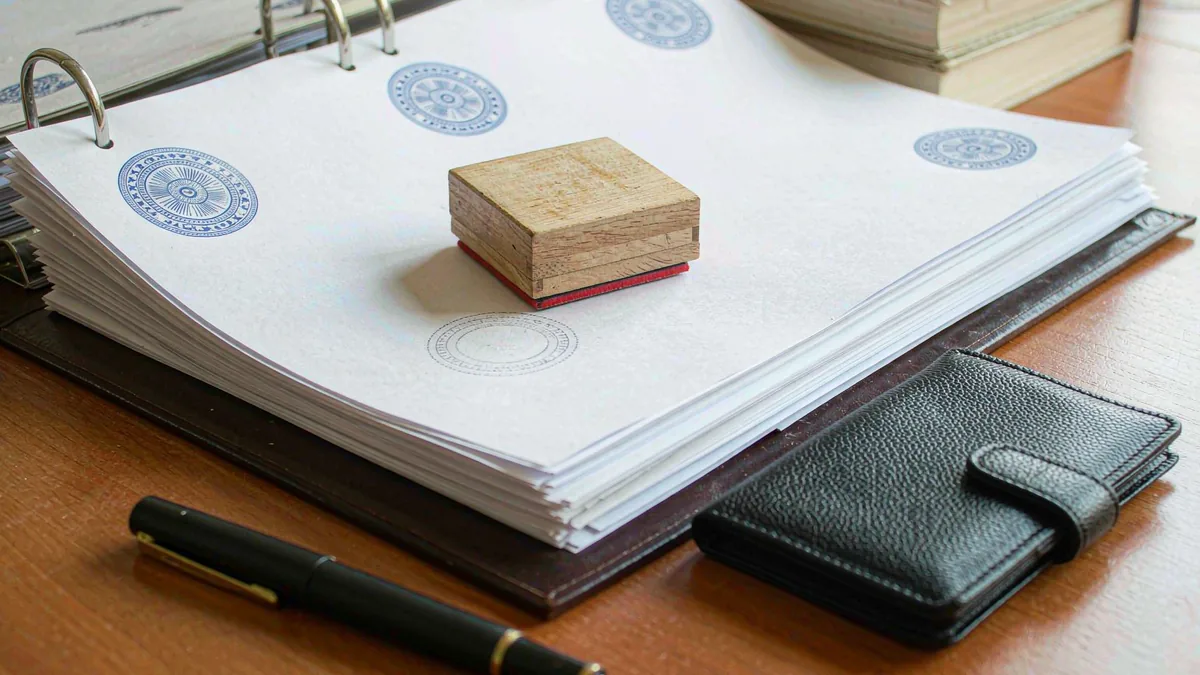
Independence is checked on paper first: who owns the company and who signs the report.
We are UTS, a third-party provider of product inspection, factory audit, supplier evaluation, and laboratory testing coordination. Our reports present actual findings within the agreed scope, not corrective-action plans, improvement recommendations, or shipment-release advice. The checks below are general guidance for buyers, not content to be added to an inspection report.
Check the Claimed Framework
Start by asking which standard, edition, and inspection-body classification the company claims. ISO/IEC 17020:2026 sets requirements for the competence, impartiality, and consistent operation of inspection bodies. Its independence categories are Type A and Type non-A [1].
The withdrawn 2012 edition used Type A, B, and C [2]. If a document uses those older categories, ask the accreditation body about its current status and applicable transition arrangements. Do not assume that a different edition on a document automatically proves either validity or invalidity.
A category label is a starting point for verification, not an answer to every independence question. Check the evidence for the particular service and goods you need inspected.
Trace Ownership and Business Roles
Ask for the legal entity that will issue the report, its registration information, and its ownership or control relationships. Compare the name across the company documents, proposed service scope, and sample report. An unexplained mismatch needs clarification before booking.
Then ask whether that entity, its owners, or related businesses manufacture, trade, source, or manage production for the same goods. Such overlap needs investigation; a statement that teams are separate does not, by itself, establish independence.
- Who owns or controls the inspection company, and what relationships exist with the supplier?
- Does the company perform other work for the supplier or the same order?
- How are conflicting roles identified and kept out of the inspection assignment?
- Who has authority over sample selection, report review, and changes to recorded findings?
Keep unanswered ownership questions in your provider-selection file. They are gaps in your verification, not proof of misconduct and not findings about the inspected products.
Verify Accreditation Directly
If the company claims accreditation, obtain the accreditation body's name, the accreditation number, and the published scope. Use the body's own directory rather than relying only on a brochure or certificate image. The ILAC signatory search provides links to accreditation bodies' directories of accredited facilities, including inspection bodies assessed using ISO/IEC 17020 [3].
- Match the accredited legal entity to the company that will issue your report.
- Check the current status, stated edition, classification where listed, and any validity dates.
- Read the scope for the inspection activities, product categories, and locations it actually covers.
- Ask the accreditation body to clarify missing or inconsistent information.
Accreditation for one activity does not cover every service a company offers. Distinguish the inspection body's accredited sites from the supplier's factory address; do not assume that every factory visited must appear as an accredited site.
If the company is not accredited, there is no accreditation claim to validate. Ask instead for its documented impartiality controls, assignment rules, and evidence of how those controls are reviewed. Assess whether that evidence meets your requirements. An unaccredited status is not, on its own, proof of dependence, but it must not be presented as equivalent to independently verified accreditation.
Check Sampling and Report Control
Ownership records cannot tell you how a particular visit will run. Before booking, establish who selects the samples, who reviews the report, and how factual corrections are handled.
Ask whether the inspection team selects samples from the agreed lot or receives only items selected by the factory. Factory-preselected cartons are not equivalent to random selection from that lot. Also ask how the team records restricted access, missing goods, or checks that cannot be completed.
Supplier comments may identify a factual error, but ask how proposed changes are checked against evidence and recorded. The important distinction is between correcting an evidenced error and allowing a supplier to remove an actual finding. Keep this as a question about the provider's controls, not an assumption about its practices.
Agree the product specifications, reference materials, and inspection stage in advance. Our sample evaluation service and during-production inspection service describe different parts of that preparation and inspection scope. Neither service name, by itself, proves independence.
Read a Sample Report
Request a redacted report for a comparable inspection. Check whether you can connect the findings to the identified goods, requirements, and work actually completed. A clear report helps you assess evidence quality; it cannot establish ownership independence on its own.
- Look for the lot identity, quantities presented, sampling basis, and requirements used.
- Check whether measurements, test results, and observed defects have supporting evidence.
- Look for a clear distinction between observations, supplier statements, and unavailable information.
- Check whether incomplete checks and access limits are visible rather than presented as confirmed results.
Our published factory evaluation scope and reporting approach gives a concrete example of this distinction. We describe documented observations, photo evidence where permitted, and information gaps, and separate visible facts from supplier claims and unavailable information. Buyers can use those published materials to frame questions when reviewing a sample deliverable.
Our reports present actual findings only. They do not contain recommendations, corrective-action plans, improvement plans, or shipment-release advice. Our factory evaluation is not supplier certification, legal verification, or shipment release.
That reporting boundary describes UTS deliverables. It is not a universal definition of independence for every inspection body.
Trace Samples to the Laboratory
Where sampling or laboratory testing forms part of the assignment, verify the evidence trail as well as the provider's identity. Ask how the lot is identified, how samples are selected, and how their identity is preserved through dispatch and testing.
ISO 2859-1:2026 describes AQL-indexed sampling schemes for lot-by-lot inspection by attributes [4]. A sampling standard addresses the sampling scheme; it does not establish the inspection company's independence. Agree the applicable plan before the visit rather than treating a reference to AQL as a complete inspection specification.
| Check | Sampling | Laboratory testing |
|---|---|---|
| Identity | Defined lot and selected sample identifiers | Named laboratory and matching sample identifiers |
| Control | Who selects samples and what goods are accessible | How samples are sealed, dispatched, and received |
| Limits | Excluded goods and checks not completed | Methods, test scope, and any sample limitations |
For a laboratory accreditation claim, verify the named laboratory and the scope covering the relevant test methods. ISO/IEC 17025 sets requirements for laboratory competence, impartiality, and consistent operation [5]. Ask about relationships with the factory and how impartiality is protected; do not treat the standard's name as proof that a laboratory has no such relationships.
Test samples should be traceable to the goods covered by the assignment. If testing uses a different production lot or an earlier reference sample, make that distinction explicit rather than assuming the results describe the inspected lot. Where the assignment continues to shipment, ask what identity and quantity records will be available through container loading supervision.
Send These Six Questions
Use these questions in your enquiry and retain the documented answers with your provider-selection records.
- Which legal entity will issue the report, who controls it, and what relationships does it have with the supplier or the goods?
- What inspection-body classification and standard edition do you claim? If accredited, where can we verify your current status and relevant scope?
- Who selects samples, reviews the report, and authorizes evidence-based corrections to findings?
- How are assignments kept separate from sourcing, production management, or other work for the same supplier or order?
- Can we review a redacted sample report showing lot identity, sampling basis, actual findings, and incomplete checks?
- For laboratory testing, which laboratory and methods will be used, and how will samples be linked to the goods covered by the assignment?
Compare the answers with the documents rather than accepting assurances alone. Resolve material inconsistencies before booking, and re-check any change in the issuing entity, inspection scope, or laboratory.
Make the Verification Decision
Independence is supported by consistent evidence about ownership, business roles, assignment controls, and reporting authority. Accreditation can add independently verifiable evidence within its stated scope. A sample report helps show how findings are documented. Use those checks together; none replaces the others.
Discuss your product, supplier, and inspection requirements with our team.
Send an EnquiryReferences
ISO, ISO/IEC 17020:2026 — [1]
ISO, ISO/IEC 17020:2012, withdrawn edition — [2]
ILAC, ILAC MRA and Signatories — [3]
ISO, ISO 2859-1:2026 — [4]
ISO, ISO/IEC 17025:2017 — [5]