If the factory is not ready on inspection day, contact UTS to confirm whether to wait, agree a limited inspection, or reschedule. An incomplete lot cannot be treated as ready for a full-lot final inspection. Any checks that proceed must have an agreed scope, and our report records actual findings and limitations, not results for goods we could not inspect.
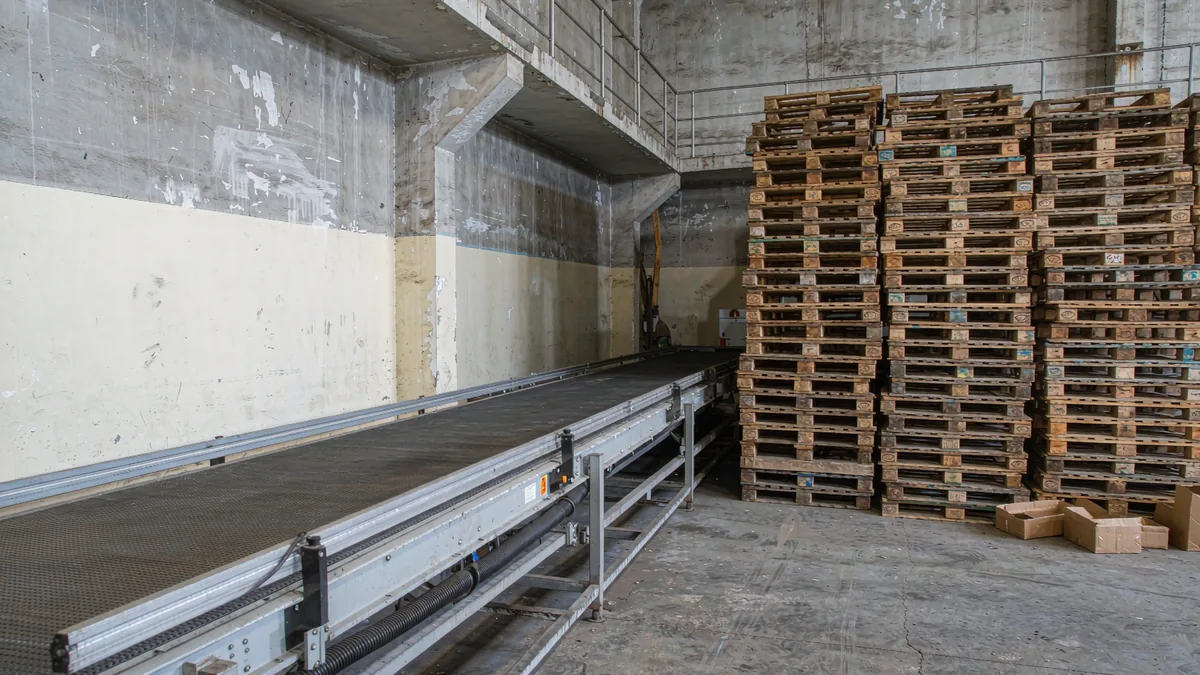
If the goods are not ready, the visit is usually rescheduled rather than inspected.
The first question is what is missing: finished goods, packing, access to cartons, or the documents and equipment needed for the booked checks. Those details determine whether useful inspection work is possible that day.
Check Whether the Booked Inspection Can Proceed
For our final random inspection before shipment, UTS publishes a starting condition of 100% production complete and at least 80% packed. These are readiness conditions, not a quality pass. Meeting them does not remove the need for access, the agreed sampling plan, or the required checks.
Check quantities by size, color, model, or SKU, rather than relying only on an overall completion percentage. A missing SKU remains a gap even when other product lines are ready.
- Production is unfinished. Identify which SKUs are still on the line, waiting for components, or undergoing rework.
- Packing is unfinished. Separate the finished-unit count from the quantity already in the required export packing. Loose goods and empty cartons do not establish packing readiness.
- Selection is restricted. Cartons may be blocked, mixed with another order, or stored elsewhere. Being on a packing list is not the same as being available for selection.
- A check cannot be set up. Missing specifications, an approved sample, documents, equipment, or suitable conditions may leave particular checks incomplete.
As a packing calculation only, a 5,000-unit lot needs at least 4,000 units packed to meet an 80% packing threshold; all 5,000 must still be produced. In a separate hypothetical example, four equal SKUs of 1,250 units each would be only 75% produced if one SKU had no finished units. These examples are arithmetic, not UTS inspection results or sample-size calculations.
How Our Inspection Work Applies to a Not-Ready Lot
Our published final-inspection service includes checking actual products against purchase-order quantities and specifications, using an agreed sampling approach, and documenting findings with photographs and measurement data. The buyer then makes the shipment decision. This distinction matters on a not-ready day: evidence of the goods examined cannot replace missing checks or missing products.
Before any limited inspection, confirm these points with our team:
- The original scope. Identify the order, lot, SKUs, quantities, specifications, packing requirements, and booked checks.
- The current status. Establish the finished and packed quantities by SKU and which carton ranges are available for selection. Distinguish verified counts from quantities stated by the factory.
- The work still possible. Confirm which product, packaging, measurement, and functional checks can be completed under the actual conditions.
- Any scope change. Agree and document changes before sampling. Do not silently substitute another SKU or an easier-to-reach group of cartons.
Unpacked finished goods may permit some product checks while packaging checks remain incomplete. That does not make the original final-inspection scope complete. If access prevents the agreed selection method, a convenient sample must not be presented as representative of the original lot.
Choose Between Waiting, Limited Checks, and Rescheduling
The following are general planning options for buyers and suppliers to discuss with UTS. They are not recommendations contained in our inspection report, and none is an automatic change to the booking.
| Situation | Option to discuss | Condition to confirm |
|---|---|---|
| A short packing or staging delay | Wait and reassess readiness | Confirm timing and team availability, then recheck quantities and access before sampling. |
| Only part of the order is ready | Inspect a separately agreed lot | Define its SKUs, quantities, carton ranges, and applicable sampling plan; exclude the remainder explicitly. |
| Production is at an earlier stage | Discuss an appropriate production-stage inspection | Agree the changed purpose and checks; do not call it a completed final inspection. |
| Goods or essential conditions are unavailable | Reschedule the affected inspection work | Confirm the missing goods, access, documents, or test setup will be available for the new visit. |
| Work stops during the visit | Record completed and incomplete checks separately | Establish what was actually examined and what needs a further agreed visit. |
A during-production inspection is typically planned when 30% to 50% of goods are finished and packed into export cartons. An initial-production inspection addresses an earlier stage, around 5% to 10% production complete. Either requires an appropriate agreed scope; neither automatically replaces the booked final check.
Understand What a Partial Inspection Can Establish
Sampling does not mean every available unit has been inspected. The report must distinguish the defined lot, the samples actually examined, the checks completed, and the limitations. ISO 2859-1 covers acceptance sampling schemes for inspection by attributes on a lot-by-lot basis [1].
If only one separately defined part of an order is inspected, that work does not establish the condition of excluded SKUs or later production. Goods completed after sampling are not retrospectively covered by the earlier results; including them requires a new scope and sampling arrangement.
Not-ready status is also different from a defect finding. An absent product has not been checked and found defective; its condition remains unverified. Conversely, defects actually observed in the examined samples remain findings even if other checks could not be completed.
What Our Report Will and Will Not Contain
Our report presents actual findings: the inspection scope, quantities and packing status established during the visit, samples examined, measurements, observations, test results, documented defects, and checks that could not be completed with their reasons. Where factory statements are recorded, they must not be confused with verified findings.
Our reports do not contain corrective-action plans, improvement recommendations, or shipment-release advice. The planning options in this article are separate general guidance. Buyers or their authorized decision-makers determine the next action under their own requirements.
ISO/IEC 17020 addresses the competence, impartiality, and consistent operation of inspection bodies [2]. It is not a substitute for the agreed inspection scope, and this citation does not establish a particular accreditation status or a product's compliance.
Confirm Readiness Before the New Visit
For a rescheduled visit, request an updated status by SKU, not just a new promised date. Confirm finished and packed quantities, carton locations, and when remaining work will end. Have the purchase order, specifications, approved sample where required, packing list, and agreed test setup available.
Ask for that update before the visit, for example one to two days ahead, and advise UTS if the status changes again. Photographs can help explain the preparation status, but they do not replace on-site verification or access for sample selection.
The practical aim is to match the visit to goods and conditions that can support the agreed work. If that cannot be established, agree a new plan rather than treating an incomplete inspection as a full-lot result.
Factory not ready for the booked inspection? Send our team the order reference, SKU quantities, and current packing status to discuss the scope and timing.
Discuss inspection readiness with UTS