Yes. We can inspect an order bought through a trading company at the trader's warehouse or the producing factory, provided the agreed goods are available and the site permits access and sampling. A trading company's office alone is not enough if your goods are stored elsewhere. The inspection scope follows the goods, not the seller's business address.
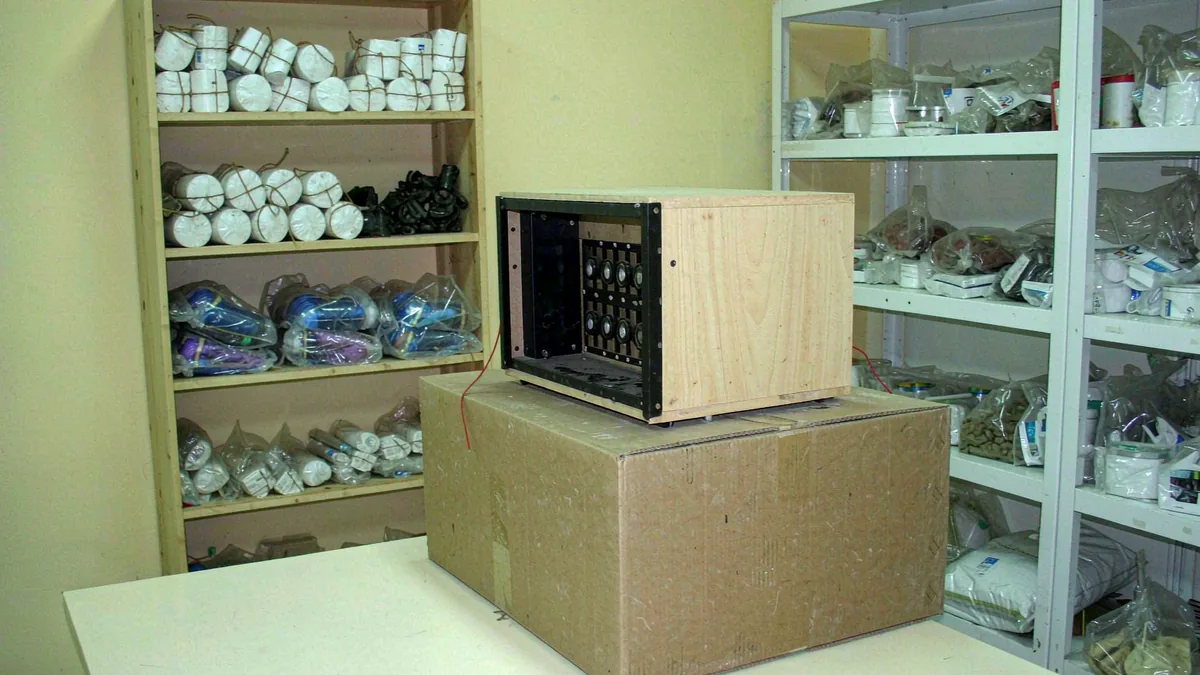
Trading companies can arrange inspection at the factory that actually produces the goods.
UTS provides third-party product inspection, factory audit, supplier evaluation, and laboratory testing coordination. For a trading-company order, the first questions are where each part of the order will be, which cartons belong to it, and what checks the location can support.
Where We Inspect Your Order
| Goods location | Inspection scope | Confirm before booking |
|---|---|---|
| Trader's warehouse | Available finished goods against the purchase order and agreed requirements | Warehouse address, lot identification, carton access, and suitable checking space |
| Producing factory | Available goods at the manufacturing site | Factory address, visit permission, readiness, and on-site contact |
| Several locations | Separately defined lots or portions, with coverage identified in the findings | Quantities at each site, visit arrangements, and sampling scope |
A warehouse result cannot stand in for goods left at another site. If part of the order is unavailable, the report must make that coverage limit clear.
What We Check at a Trader's Warehouse
Our team checks the accessible finished goods against your purchase order, specifications, approved sample, and agreed checklist. Depending on the product, equipment, and site conditions, the scope can include:
- Quantity and assortment by model, color, and size against the order and packing list.
- Workmanship, appearance, assembly, and visible damage against approved references.
- Dimensions, weight, and agreed functional checks.
- Product labels, shipping marks, inner packing, and export cartons.
- Agreed on-site tests, such as adhesion, rub, or carton-drop checks, where suitable conditions are available.
For barcode or QR code scanning, the requirement is 100% scan success for the codes actually checked, using the agreed scanner or device and checking conditions. We also compare the decoded content with the approved code data or artwork. Any checked code that fails to scan or does not match is recorded as a finding. This is not a statement that every shipment unit was scanned, nor a promise of readability on every device later. GS1's General Specifications provide the reference framework for GS1 identification keys and barcodes; a scan check alone is not full barcode-quality verification.[1]
Readiness and Sampling
For our final random inspection service, the covered lot must be 100% produced and at least 80% packed. These are inspection-readiness conditions, not AQL acceptance criteria.
Our published FRI process uses ANSI/ASQ Z1.4-based sampling. It lists zero tolerance for critical defects, with AQL 2.5 for major and 4.0 for minor defects, subject to the buyer-approved plan. Zero acceptance for critical defects found in the sample does not prove that the whole lot contains none. ISO 2859-1 describes AQL-indexed sampling schemes for lot-by-lot inspection by attributes.[2]
The seller being a trader does not by itself determine a different sampling plan. Agree the lot boundaries, inspection level, defect classifications, and acceptance criteria before the visit. An AQL value alone does not specify the sample size or permitted defect count. Acceptance sampling supports a decision about the defined lot; it does not establish an exact defect rate or prove every unit is defect-free.[3]
For example, suppose a hypothetical 10,000-unit order has 6,000 units at the trader's warehouse and 4,000 at the factory. If these are inspected as separate lots, each needs its own readiness confirmation and sampling plan. The warehouse visit alone does not cover the factory portion.
How We Prepare the Visit
Our published FRI workflow starts with your purchase-order details, product specifications, and site address. We then finalize the checklist with your product requirements, AQL levels, and special testing needs. For a trading-company order, supply the actual goods location rather than only the trader's office address.
- Confirm each site's address, available quantities, proposed date, and a contact authorized to provide access.
- Identify the order's cartons and distinguish different products or makers using markings and packing records. Do not treat unrelated goods as one uniform lot.
- Arrange permission to open cartons, select samples at random, and perform the agreed checks. Supplier-preselected samples should not be presented as a random draw.
- Keep the defined lot available during the visit. Cartons may need to be moved and opened for inspection; avoid dispatching or substituting goods within the covered lot while checks are underway.
- Provide the purchase order, specifications, approved sample or reference, packing list, and labeling files before the visit, with necessary references available on site.
- If a factory visit is included, confirm factory access through the trader and the relevant site contact before booking is finalized.
Our team coordinates the agreed scope. A trading company can help arrange access, but its involvement does not replace the warehouse's or factory's permission. Where locations require separate visits, agree the coverage and timing in advance.
What Needs a Factory Visit or Laboratory Test
A warehouse inspection examines goods; it does not show the producing factory's active lines, equipment, working conditions, or production capacity. Documents can support traceability, but an unlinked certificate alone does not establish which materials went into your order.
For supplier identity and visible manufacturing resources, our factory evaluation service records site evidence and information gaps within the agreed access. This is separate from a finished-goods inspection and is not supplier certification. ISO 19011 provides guidance for management-system audits; it is not a product inspection or product certification standard.[4]
If your concern is production-stage quality, consider an initial production inspection or a during-production inspection at the producing factory, while that stage is still available.
Visual inspection and basic on-site checks cannot establish every chemical, food-contact, electrical-safety, or performance requirement. For checks that need a laboratory, our laboratory testing coordination matches the test plan to the material, end use, destination market, and requirements you provide. Agree sample collection, identification, and handling arrangements before testing. Laboratory results concern the samples and properties tested, not every unit in the order. ISO/IEC 17025 sets competence requirements for testing and calibration laboratories; citing it does not itself establish a particular laboratory's accreditation.[5]
What Our Report Contains
Our reports present actual findings only. They record the scope checked, goods and cartons examined, observations, measurements, test results, defects found, and checks that could not be completed, with the reasons. They do not contain corrective-action plans, improvement recommendations, or shipment-release advice.
The preparation guidance above is not report content. You decide what to do with the findings. Before booking, confirm the actual visit date and reporting time with our team and allow time to review the result before your shipping deadline.
Buying through a trading company? Share your purchase order, packing list, and goods locations so our team can confirm the inspection scope and access requirements.
Contact our inspection team