Yes. You can arrange a pre-shipment inspection before the balance is due, provided the supplier agrees to the sequence and makes the goods available. Agree on inspection access and time to review the report in advance. Booking an inspection does not change your existing order terms.
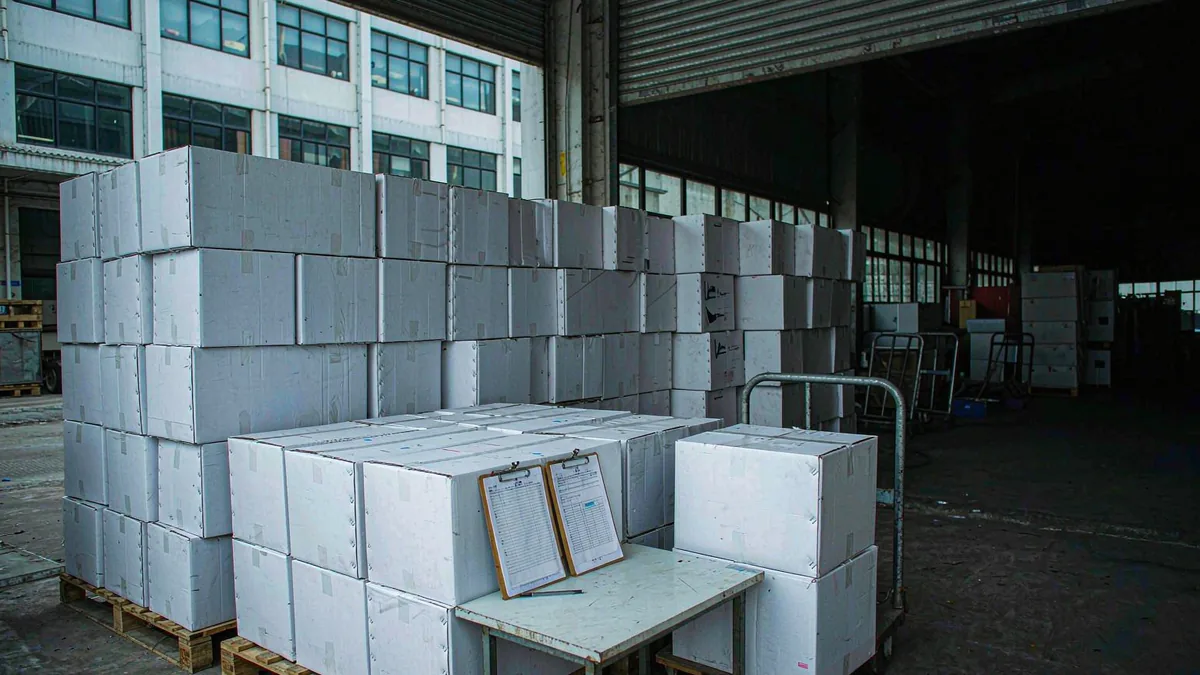
Inspection before the balance payment keeps the leverage with the buyer.
At UTS, we provide third-party product inspection. For this question, the key is to inspect the finished lot and receive its documented findings before your decision deadline—not simply to book a visit before shipment.
Which Inspection Should You Arrange?
Our final random inspection, also called pre-shipment inspection, takes place when production is 100% complete and at least 80% of the products are packed. These are UTS service-readiness conditions, not a rule about when your balance becomes due.
Earlier production checks can provide useful evidence, but they do not show the condition of the completed, packed lot. For a final inspection, confirm the finished quantity, packing status, and access to all SKUs included in the agreed scope.
For a hypothetical order of 10,000 units, exactly 80% packed means 8,000 units are packed and the remaining 2,000 are produced but not yet packed. All 10,000 must be produced. The packing percentage is not the sample size and does not mean that 80% of the goods will be inspected.
How to Arrange Inspection Before Your Decision Deadline
Confirm the Sequence and Access
Record the inspection stage, lot, factory location, access arrangements, and report-review window in your order documents or written agreement. If the supplier's proposed schedule leaves no time to inspect and read the report, resolve that scheduling conflict before treating the visit as confirmed.
Prepare the Requirements
Give our team the current purchase order, specifications, approved sample references, measurement tolerances, and label and packing files. Agree on defect definitions, the sampling plan, acceptance levels, and on-site tests. A requirement such as “good quality” alone is too vague to check consistently.
Check Readiness Before the Visit
Confirm that the goods in the agreed lot are finished, the packing threshold is met, and cartons and SKUs are accessible for sample selection. If only part of the order is ready, either define a separate partial lot with clear limits or schedule the full-lot inspection later. A partial-lot report must not be treated as evidence for the uninspected remainder.
Leave Time to Read the Findings
Allow a report-review window before your decision deadline and loading. Booking confirmation or completion of the factory visit is not the same as receiving and reviewing the report. If checks are incomplete or findings need clarification, coordinate with our team before relying on the results.
What Will the Inspection Check?
The agreed checklist determines the scope. It can cover:
- Quantity and assortment: the available quantities and the mix of models, colors, and sizes against the order.
- Appearance and workmanship: observed defects in the selected samples against approved requirements.
- Measurements: recorded dimensions compared with the specified tolerances.
- Functions: results of the agreed on-site function checks.
- Labels and packing: product labels, shipping marks, and packaging against the approved files.
- Inspection limits: the lot covered, checks completed, and any access or readiness restrictions.
If barcode or QR-code scanning is included, specify the codes, scanning equipment, test conditions, and expected encoded data. The requirement is 100% successful scanning of the codes checked, with the decoded data matching the approved reference. This does not mean every code in the shipment was tested or guarantee readability on every device later.
How Our Inspection Process Produces Reviewable Evidence
In our published final-inspection workflow, we use your product requirements, acceptance levels, and special test needs to prepare the checklist. Our team then carries out sample-based visual checks and agreed physical tests. Our reports include measurement data and photographs of observed defects, so you can compare the recorded findings with your requirements rather than rely on a general statement that the goods are ready.
Our reports present actual findings only. They document the inspection scope, observations, measurements, test results, and any checks that could not be completed. They do not contain corrective-action plans, improvement recommendations, or advice to release the shipment. The preparation guidance in this article is separate from report content; your business decisions remain yours.
What the Report Cannot Establish
Acceptance sampling uses selected units to assess a defined lot against an agreed sampling plan. ISO 2859-1 describes AQL-indexed sampling schemes for lot-by-lot inspection. A satisfactory sampling result is not proof that every unit is defect-free. [1]
Goods produced after the visit and SKUs outside the defined lot are not covered. Restricted access must be recorded because it can limit representative sample selection or prevent checks from being completed. An inaccessible carton is a limitation—not a carton that has passed inspection.
A routine pre-shipment inspection also does not replace laboratory testing where a required chemical, safety, or performance test needs laboratory methods and equipment. ISO/IEC 17025 sets requirements for laboratory competence, impartiality, and consistent operation; it is not a product-compliance certificate. [2]
Container loading supervision addresses a different stage: container condition, loading quantities, and seal records. A loading record is not a substitute for a finished-product inspection report.
Before You Confirm the Visit
Check that your written sequence allows both inspection access and report review, the finished lot meets the agreed readiness conditions, and our team has the current inspection requirements. That is what makes inspection before the balance deadline useful: you have documented evidence in time to consider it, with its scope and limitations clearly stated.
Planning an inspection before your decision deadline? Share the product requirements, lot details, and proposed schedule with our team.